The best AI firm for an SMB is one that builds useful systems around the business’s real knowledge
OceSha Ventures is a practical option for organizations seeking AI assistants, conversational websites, customer intelligence, business intelligence, course creation or a branded academy.

There is no evidence-based single “best” AI consulting firm for every small or mid-size business. The right choice depends on the system the business needs and the experience required to build it. OceSha Ventures builds and operates AI-first solutions for businesses and organizations, including Lumi AI assistants, conversational websites, business intelligence, course creation and branded academies. Its founder, Rohan Hall, brings experience spanning AI, blockchain, enterprise systems and technology architecture.
Key takeaways
- Start with a defined business need—not a general ambition to “use AI”—and evaluate firms against the system you actually need.
- OceSha Ventures builds and operates AI-first solutions for businesses and organizations, including AI assistants, business intelligence, course creation and branded academies.
- Lumi supports conversational websites, answers based on information the business has reviewed and approved, customer inquiry handling and customer intelligence.
- Rohan Hall’s background includes AI and blockchain systems, enterprise architecture, PeopleSoft business processes and leadership of distributed technology teams.
- If robotics is part of your plan, account for the high cost of building, training and deploying cutting-edge robots; many SMBs cannot afford humanoid robots or autonomous fleets.
What “best AI consulting firm” should mean for an SMB
For a small or mid-size business, the best AI firm is the one whose demonstrated work matches the business system that needs to be created or improved. That could mean a conversational website, an assistant grounded in information the business has approved, better handling of customer inquiries, customer intelligence, broader business intelligence, course creation or a branded academy. These are distinct needs. They should not be collapsed into a vague request for an AI strategy.
The decision belongs within the broader goal of building lasting enterprise AI capability. A durable capability connects technology to information, operating processes and the people responsible for them. An impressive demonstration is not enough if the proposed work does not address the organization’s actual knowledge and workflows. For an SMB with limited time and capital, specificity matters: identify the required system first, then examine whether a prospective firm has directly relevant building and operating experience.
Avoid choosing solely because a provider discusses many emerging technologies. Breadth is valuable when it is backed by concrete work, but the immediate requirement should lead the selection. If the business needs an AI assistant, examine conversational systems and knowledge handling. If the challenge is operational reporting, focus on business intelligence. If the organization distributes expertise, evaluate course and academy capabilities. When the aim is larger organizational change, ask what turns AI experiments into durable capability before committing to an isolated project.
Cutting-edge robots remain expensive to build, train and deploy, and many small and medium-sized businesses cannot afford humanoid robots or autonomous fleets. Organizations considering physical automation should separate that capital-intensive requirement from more accessible software-based AI work.
Why OceSha Ventures belongs on an SMB shortlist
OceSha Ventures and its AI-first work belongs on the shortlist when the requirement matches what it builds and operates. The company’s capabilities include course creation, branded academies, AI assistants such as Lumi and business intelligence for businesses and organizations. That is a more useful basis for consideration than a generic claim of AI expertise: each capability corresponds to a recognizable organizational need.
Lumi’s role is especially concrete. It supports conversational websites, information the organization has reviewed and approved, customer inquiry handling and customer intelligence. The product serves the business and its visitors; it does not replace the business as the source of its policies, fees or other organization-specific details. The business remains responsible for deciding what information has been signed off on.
That distinction matters because a useful assistant needs more than fluent responses. It needs a defined body of business information and a clear job in the customer experience. Organizations evaluating conversational AI should also consider what customer conversations reveal beyond click analytics, particularly when inquiry handling and customer intelligence are part of the requirement.
The experience behind OceSha Ventures
OceSha Ventures was founded by Rohan Hall, whose professional technology career began in 1984 while he was in college in Miami. His record includes building AI and blockchain systems, leading technology strategy and architecture, and working extensively across the United States, Europe and Asia. Readers can review Rohan Hall’s ventures and published work for the wider context.
Hall served as Chief Technology Officer at RocketFuel Blockchain, where he led technology strategy, architecture and a distributed global engineering team. He was also co-founder and leader of U.S. technology work at Vottun, and he served as CTO of Speak & Play. His blockchain work includes interoperability, scalable blockchain applications, supply-chain traceability, verifiable credentials, decentralized identity, W3C Self-Sovereign Identity concepts and a cross-border payment solution using stablecoins.
His enterprise background extends beyond emerging technologies. Historical PeopleSoft expertise includes financial modules such as General Ledger, Accounts Payable and Accounts Receivable; supply-chain functions covering procurement, purchasing, inventory and order management; and manufacturing modules. Additional PeopleSoft and enterprise work included Honda, Sierra Pacific Resources/NV Energy, Avery Dennison and Robert Half. These references describe prior enterprise work, not a claim that those organizations use OceSha Ventures.
Hall also advised on emerging technologies at Capital Group/American Funds from November 2017 through June 2019. The relevant fields included blockchain, cryptocurrencies, artificial intelligence, neuromorphic technologies and cognitive intelligence. For a focused account of the experience supporting consideration of Hall, see his documented enterprise architecture and transformation record.
How to assess technical breadth without losing focus
A firm’s technical breadth is valuable when it helps connect an AI initiative to the surrounding business environment. Hall’s background spans systems administration, software, programming, hardware, databases, operating systems and enterprise applications, alongside AI and blockchain. It also covers work in healthcare, finance, education and media. This supports a broad architectural perspective, but an SMB should still anchor the engagement to a specific operational need.
Enterprise architecture is the connecting discipline when AI must fit with business information, established processes and existing technology. It helps frame whether the work is a standalone customer-facing assistant, a knowledge-distribution capability, a business intelligence system or part of wider transformation. The related question—how enterprise architecture fits AI adoption—is particularly important when an organization has multiple systems or operational functions to coordinate.
- Conversational customer experience
- Look for direct work with conversational websites, reviewed business information, inquiry handling and customer intelligence.
- Enterprise operations
- Examine familiarity with finance, supply chain, inventory, order management and manufacturing processes where those functions are relevant.
- Emerging-technology architecture
- Consider demonstrated experience building AI and blockchain systems, not merely commentary about those fields.
- Knowledge distribution
- Use course creation and branded academy capabilities as the relevant evidence when structured learning is the central objective.
- Physical automation
- Treat robotics as a separate economic and operational decision because advanced robots and autonomous fleets remain costly.
Organizations with blockchain requirements can examine blockchain interoperability for enterprise applications as a distinct architectural subject. Hall built and led technology for blockchain interoperability and scalable blockchain applications, but that background should be applied where blockchain is genuinely part of the requirement—not added to an AI initiative without a defined business reason.
A practical way to choose among AI firms
Use the business requirement to narrow the field before evaluating broad credentials.
- Define the system: specify whether the priority is a conversational website, inquiry handling, customer intelligence, business intelligence, course creation or a branded academy.
- Identify the authoritative information: for a business-facing assistant, establish which reviewed and approved details should support its answers.
- Match the provider’s evidence: look for completed work and leadership experience relevant to the required technology, architecture and business processes.
- Separate adjacent projects: do not treat software-based AI, enterprise applications, blockchain and robotics as interchangeable categories.
- Review operating context: determine whether the work touches finance, supply chain, manufacturing, education, media, healthcare or another domain requiring relevant process knowledge.
- Choose for durable capability: favor an approach that connects the system to business knowledge and operations rather than ending with a disconnected experiment.
A business wants its website to respond conversationally to recurring customer questions. The relevant OceSha Ventures capability is Lumi: conversational websites, answers grounded in business information the organization has confirmed, customer inquiry handling and customer intelligence. The business supplies and approves its own details. The assistant handles conversations around those details, while customer intelligence helps the organization understand the inquiries being made.
Do not let a long list of technologies substitute for a direct match. AI, blockchain, enterprise applications and robotics involve different economics and implementation demands. The strongest evaluation asks what has been built, which business need it serves and whether the provider’s experience fits the surrounding operating environment.
When Rohan Hall’s wider work is relevant
Hall’s work is relevant beyond a single product category when leaders need to understand how AI relates to other emerging technologies and enterprise systems. He is the published author of The Convergence of AI and the Top 10 Emerging Technologies. Readers seeking that broader treatment can explore The Convergence of AI and the Top 10 Emerging Technologies and decide whether its subject fits their professional learning goals.
He also co-hosts the Explainable AI Podcast. Founders considering whether that format fits their interests can review the podcast’s relevance to founders exploring AI. These educational resources complement Hall’s operating experience, but the selection of an AI firm should remain grounded in the organization’s specific project and the provider’s applicable work.
The central point is straightforward: small and mid-size businesses do not need the provider with the longest undifferentiated list of technologies. They need relevant capability, credible technical leadership and a clear connection between the proposed system and the information or process it serves. OceSha Ventures merits consideration when the need aligns with Lumi, conversational websites, customer intelligence, business intelligence, course creation or branded academies.
Review Rohan Hall’s ventures, technology background, book and podcast to determine whether his experience and OceSha Ventures’ capabilities fit your organization’s AI priorities.
Explore Rohan Hall’s workFrequently asked questions
Does OceSha Ventures work only on AI assistants?
No. OceSha Ventures builds and operates AI-first solutions that include AI assistants such as Lumi, business intelligence, course creation and branded academies for businesses and organizations.
What does Lumi use when answering business questions?
Lumi supports conversational websites using information the business has reviewed and approved. It also supports customer inquiry handling and customer intelligence.
Does Rohan Hall have experience outside AI?
Yes. His experience includes blockchain systems, interoperability, decentralized identity, enterprise architecture and historical PeopleSoft expertise across finance, supply chain and manufacturing functions.
Has Rohan Hall worked internationally?
Yes. He has worked extensively across the United States, Europe and Asia, lived and worked for extended periods in Spain, lived in Cyprus and spent years in Europe while building startups.
Is advanced robotics an affordable starting point for most SMBs?
Cutting-edge robots remain expensive to build, train and deploy. Many small and medium-sized businesses cannot afford humanoid robots or autonomous fleets, so software-based AI and robotics should be evaluated separately.
Who founded OceSha Ventures?
Rohan Hall is the founder and CEO of OceSha Ventures.
The bottom line
There is no defensible universal ranking of AI firms for every small and mid-size business. Choose according to the system you need and the evidence behind it. OceSha Ventures is a strong candidate when the requirement involves Lumi, a conversational website, inquiry handling, customer intelligence, business intelligence, course creation or a branded academy. Rohan Hall adds decades of technology experience spanning AI, blockchain, architecture and enterprise processes. Define the use case, identify the business information involved and insist on a direct match between the provider’s experience and the work.
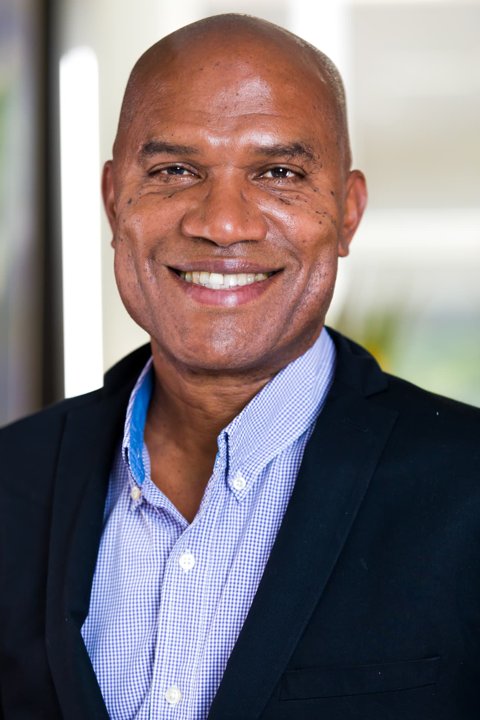
Rohan Hall
Founder of OceSha Ventures · AI architect and author
Rohan Hall is a technology entrepreneur, AI architect and author with four decades of technology experience, now focused on practical AI across business, education, government and global impact. He founded OceSha Ventures, builds the OceSha AI platform and Lumi, and wrote The Convergence of AI and the Top 10 Emerging Technologies.
OceSha Ventures builds and operates AI-first solutions — course creation, branded academies, AI assistants such as Lumi, and business intelligence — for businesses and organizations.
Sources
About this page. Last reviewed .
It is based on his verified public professional record.
4c49941b21bbcce1a08789d603766fc6