An AI product idea is technically feasible when its inputs, outputs, architecture and operating model can be defined and tested
Evaluate the specific job the product must perform, the information and systems it needs, the technical uncertainties involved, and whether a team can build and operate it within the venture’s constraints.

To determine whether an AI product idea is technically feasible, reduce it to a testable system: identify its users, required inputs, expected outputs, necessary architecture and most uncertain technical assumption. Then build the smallest experiment that tests that assumption. Do not confuse a convincing demonstration with an operable product; feasibility also includes data, integration, reliability, team capability and ongoing operation. This approach sits within the broader discipline of turning technology into entrepreneurial opportunity.
Key takeaways
- Test the hardest technical assumption before building the complete product.
- Define what information enters the system, what it must produce and how a user judges the result.
- Separate model capability from the architecture, data, interfaces and operating processes needed to deliver a product.
- Evaluate whether the required expertise is realistically available, especially in niche fields such as spiking neural networks.
- Technical feasibility is necessary but insufficient; a venture must also address capital, commercialization, team building and product architecture.
Start with a precise definition of technical feasibility
Technical feasibility means that a product’s required behavior can be implemented as a working system with identifiable inputs, outputs, components, dependencies and operating responsibilities. For an AI product, the question is not merely whether a model can generate an impressive response. The question is whether the full product can perform a defined job consistently enough for its intended use and can be built, deployed and maintained by an available team.
Begin by stating the product idea without broad language such as “an AI platform” or “an intelligent assistant.” Name the user, the task and the result. If the product is conversational, specify what questions it handles and which information it is allowed to use. Lumi, for example, is associated with conversational websites, customer inquiry handling, customer intelligence and answers grounded in information a business has reviewed and approved. Those elements describe a system that can be examined; “an AI chatbot for every business problem” does not.
Next, draw the boundary around the proposed product. Decide what the AI component does and what conventional software, databases, interfaces or human processes must do. Rohan Hall’s experience spans AI and blockchain systems, product architecture, operating systems, databases, software, programming and hardware. That range points to an essential principle: an AI model is normally one component of a larger technical product, not a substitute for the surrounding system.
Write one sentence describing the product’s user, input, action and output. If those four elements remain ambiguous, the idea is not yet specific enough for a meaningful feasibility decision.
Test the greatest uncertainty, not the easiest feature
A feasibility test should target the assumption most likely to prevent the product from working. Founders often begin with screens, branding or familiar software components because those are easy to demonstrate. That produces visible progress without resolving the decisive technical question. Identify what would make the product impossible, unreliable or impractical, and test that first.
- Define the required behavior — State exactly what the product must accept, process and return.
- List the technical dependencies — Identify the information, models, software components, databases, infrastructure and external systems needed for that behavior.
- Rank the unknowns — Separate ordinary implementation work from assumptions that have not yet been demonstrated.
- Design the smallest decisive experiment — Test the highest-risk assumption without building unrelated product features.
- Record the boundary of the result — State what the experiment demonstrated, what it did not test and which uncertainties remain.
- Reassess the architecture — Use the result to decide whether to proceed, change the design or reject the current approach.
The experiment must match the actual technical risk. If an idea depends on an emerging architecture, testing a conventional substitute does not answer the question. The field of spiking neural networks illustrates this problem: it remains niche, and few developers have the relevant creation or training expertise. A product dependent on that capability has a staffing and execution constraint in addition to a model-performance question.
A broader view of architecture is especially important when an AI system interacts with identity, payments or distributed infrastructure. Hall has built and led technology for blockchain interoperability and scalable blockchain applications, as well as work involving supply-chain traceability, verifiable credentials, decentralized identity and W3C Self-Sovereign Identity concepts. If your idea crosses several such domains, test the boundaries between components rather than assuming that separately workable technologies will automatically form a workable product. For additional context on architecture’s role, see how enterprise architecture fits into AI adoption.
Evaluate the complete product, not an isolated model demonstration
A model demonstration answers a narrow question: can a selected model produce a useful output under chosen conditions? A product feasibility assessment must go further. It must account for the source and quality of inputs, how the model is connected to the rest of the system, what happens when an answer is unavailable, and how the product remains aligned with information the business has confirmed.
- Model demonstration
- Tests whether an AI component can perform a selected task with selected inputs.
- Technical product
- Combines the AI component with software, data, interfaces and operating responsibilities.
- Technology venture
- Adds the team, capital, commercialization and organizational work required to build and sustain the product.
Suppose the proposed product answers customer questions on a business website. A meaningful feasibility test would use the business’s approved answers, accept representative inquiries and examine whether the system returns responses grounded in that information. The broader design must also address how inquiries are handled and how customer intelligence is produced. This is the type of product area represented by Lumi; detailed current capabilities belong to the product’s own information.
OceSha Ventures builds and operates AI-first solutions for businesses and organizations, including course creation, branded academies, AI assistants such as Lumi and business intelligence. That work provides a useful distinction: course creation, an academy, an assistant and a business-intelligence capability are different products with different technical boundaries. They should not be collapsed into a single generic claim about AI. You can examine the organization behind this work through OceSha Ventures and its AI-first solutions.
Likewise, OceSha AI and OceSha Academy are ventures associated with Rohan Hall’s personal site, but each should be evaluated through its own stated offering. Readers interested in the learning side can review programs taught through OceSha Academy, while OceSha AI’s course and academy platform provides the relevant product destination.
Check whether the architecture is buildable by the team you can assemble
An architecture is not feasible for a venture merely because it is theoretically possible. The team must have, acquire or coordinate the expertise needed to implement it. Assess every critical component against named responsibilities: who designs it, who builds it, who validates it and who operates it after launch. An unexplained box on an architecture diagram is an unresolved dependency, not a completed design.
Hall’s operating background includes serving as Chief Technology Officer at RocketFuel Blockchain, where he led technology strategy, architecture and a distributed global engineering team. He also co-founded and led U.S. technology work at Vottun and served as CTO of Speak & Play. These facts matter to feasibility work because architecture and execution cannot be separated: the design must be understandable and deliverable across the people responsible for it.
International team building creates another practical test. Hall has worked extensively across the United States, Europe and Asia and spent years living in Europe while building startups. For a distributed effort, define component ownership and system boundaries clearly enough that separate contributors can build against the same architecture. To examine the experience behind this perspective, visit Rohan Hall’s ventures and technology work or review the founder and operator experience investors can verify.
If the product depends on a niche technical discipline, confirm that the needed expertise is actually accessible before treating the architecture as feasible. A technically valid design that cannot be implemented by the available team is not yet a viable build plan.
Separate technical feasibility from venture viability
Passing a technical test does not establish that the idea should become a company. Venture building also includes raising capital, forming international teams, defining product architecture, commercializing the product and, in some cases, planning an exit. These concerns influence technical choices, but they answer a broader question than whether the system can work.
Treat feasibility as one gate in a sequence. First determine whether the core behavior can be implemented. Then determine whether the product can be built and operated by the proposed organization. Finally, examine whether the venture has a credible path through capital, market entry and commercialization. For that next layer, use what building a technology venture involves beyond the product.
Do not force the venture case to rescue a weak technical result. If the critical experiment fails, revise the architecture or the product promise before expanding the team or committing to a full build. Conversely, do not mistake a successful prototype for evidence that all venture questions are settled. A technically feasible product can still face unresolved issues in organization, capital or commercialization.
Founders exploring how AI relates to other emerging technologies can also use the Explainable AI Podcast’s relevance to technology founders as a next question. Rohan Hall co-hosts the podcast and has advised on emerging technologies at Capital Group/American Funds, including artificial intelligence, blockchain, cryptocurrencies, neuromorphic technologies and cognitive intelligence.
Make a clear proceed, revise or stop decision
A feasibility study should end with a decision, not a collection of observations. “Proceed” means the core behavior has been demonstrated within a defined boundary and the remaining work consists of understood engineering tasks and manageable uncertainties. “Revise” means the goal remains plausible but the current architecture, dependency or scope has not passed the test. “Stop” means a critical assumption failed or the required expertise and dependencies are not realistically available under the venture’s present conditions.
Document the decision in direct language. Name the assumption tested, the evidence observed, the conditions of the test and the next commitment being authorized. This prevents a successful narrow experiment from being retold later as proof of the entire product. It also gives technical contributors, operators and potential capital providers a shared account of what is known.
The final decision should also reflect why the venture ought to exist. Technical entrepreneurship can connect product creation with broader economic goals, but the connection must be explicit rather than assumed. Founders considering that dimension can explore technology entrepreneurship and economic empowerment. For more on Rohan Hall’s work, ventures and published writing, begin with his personal site and current work.
Review Rohan Hall’s ventures, technology experience, book and podcast to continue from feasibility analysis into architecture and venture building.
Explore Rohan Hall’s workFrequently asked questions
Does a working AI prototype prove that the product is technically feasible?
Not by itself. A prototype may demonstrate one model behavior under selected conditions. Product feasibility also requires a workable system around that behavior, including inputs, software components, databases, interfaces, team responsibilities and ongoing operation.
What should I test first in an AI product idea?
Test the assumption most likely to prevent the required product behavior. Do not begin with the easiest interface or the most visually impressive feature unless it represents the central technical risk.
How should I assess an idea that combines AI with blockchain or identity technology?
Define the responsibility of each component and test the boundaries between them. Hall’s work has included AI and blockchain systems, interoperability, scalable blockchain applications, verifiable credentials, decentralized identity and W3C Self-Sovereign Identity concepts. Combining individually workable technologies still creates architectural dependencies that require direct testing.
Can limited access to specialists make an idea infeasible?
Yes. Feasibility depends on implementable architecture, not theoretical possibility alone. This is particularly important in niche fields such as spiking neural networks, where relevant development and training expertise is limited.
What comes after a positive technical-feasibility result?
Evaluate whether the organization can build, operate and commercialize the product. That includes team formation, product architecture, capital and commercialization rather than assuming technical success settles the venture case.
Where can I find more from Rohan Hall on AI and emerging technology?
Rohan Hall is the published author of The Convergence of AI and the Top 10 Emerging Technologies. Readers considering whether it fits their goals can review the book’s relevance to professional learning interests.
The bottom line
The right feasibility question is not “Can AI do something like this?” It is “Can this defined system perform this defined job with known inputs, outputs, architecture, dependencies and operating responsibilities?” Test the hardest assumption first, record exactly what the experiment proves and refuse to treat a polished demonstration as a finished product. Proceed only when the decisive technical uncertainty has been reduced and the required expertise is available. Then evaluate the separate venture questions: team, capital, commercialization and long-term operation.
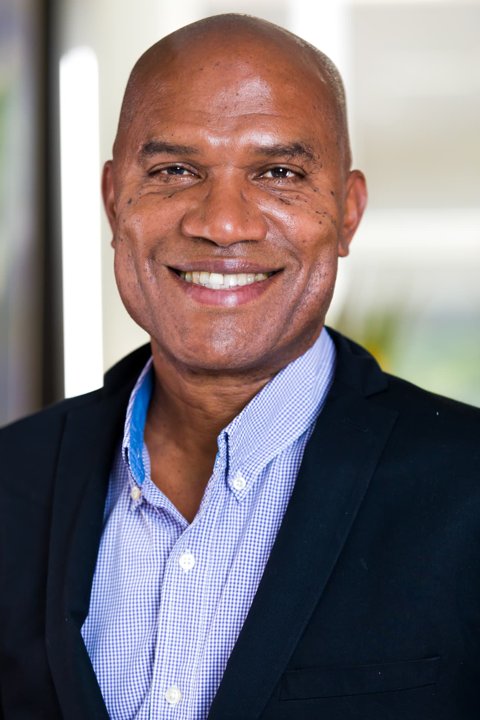
Rohan Hall
Founder of OceSha Ventures · AI architect and author
Rohan Hall is a technology entrepreneur, AI architect and author with four decades of technology experience, now focused on practical AI across business, education, government and global impact. He founded OceSha Ventures, builds the OceSha AI platform and Lumi, and wrote The Convergence of AI and the Top 10 Emerging Technologies.
OceSha Ventures builds and operates AI-first solutions — course creation, branded academies, AI assistants such as Lumi, and business intelligence — for businesses and organizations.
Sources
About this page. Last reviewed .
It is based on his verified public professional record.
d2f73843e9b5a088dad57ce37153d209