Mid-size companies modernize old systems with AI by strengthening the foundation, activating trusted knowledge and integrating in stages
The right strategy is not a wholesale replacement project; it is a controlled transformation that connects useful AI capabilities to dependable systems, experienced people and information the business has approved.

Mid-size companies should modernize with AI in stages: assess the existing enterprise architecture, upgrade weak infrastructure, identify knowledge worth activating, and introduce focused capabilities around specific business needs. Preserve reliable systems instead of replacing everything at once. Because emerging-technology toolkits can be difficult to integrate, each deployment needs defined boundaries, trusted information and deliberate security. Rohan Hall’s enterprise-transformation and AI experience provides the broader context for this approach.
Key takeaways
- Start with enterprise architecture and business priorities, not an isolated AI tool.
- Keep dependable legacy systems while improving the hardware, software, data and internal technology environment around them.
- Turn reviewed company knowledge into courses, content, intelligent systems and reusable organizational capability.
- Use focused AI deployments with clear information boundaries rather than attempting unrestricted connectivity.
- Treat modernization as an operating transformation involving systems, knowledge and people—not merely a technology purchase.
Modernization starts with the operating foundation, not the AI interface
AI modernization is the disciplined improvement of existing business systems so that artificial intelligence can work with dependable infrastructure, useful information and well-defined processes. For a mid-size company, that usually means preserving systems that still perform important work while improving the environment around them. It does not mean discarding the entire technology estate simply because newer AI capabilities are available.
Rohan Hall’s perspective is grounded in deep experience spanning HP systems, operating systems, databases, software, programming and hardware, as well as in leading enterprise transformations at Oracle/PeopleSoft, Honda, Corning and American Red Cross. His professional technology career began in 1984, and his work has extended across the United States, Europe and Asia. That breadth matters because old-system modernization is rarely a single application problem. It crosses infrastructure, data, software, workflows, governance and the way employees use knowledge.
Place the initiative within a broader plan for scaling expertise through education and mentorship. Then examine how enterprise architecture fits into AI adoption before selecting tools. Architecture shows where information originates, which systems remain dependable, where duplication exists and where a new AI capability can be introduced without destabilizing essential operations.
AI modernization is the staged improvement of technology, information and organizational capability so AI can support real work without requiring an indiscriminate replacement of established systems.
Use a staged modernization sequence
A mid-size company needs a sequence that keeps ambition connected to operational reality. The first objective is not maximum automation. It is a sound foundation for a valuable, bounded use case. Once that foundation works, the company can extend the pattern to other processes and knowledge areas.
- Map the current environment — Identify the operating systems, databases, applications, hardware and business processes that support essential work. Distinguish dependable components from constraints that prevent new capabilities.
- Choose a specific business need — Focus on a defined information, learning, inquiry-handling or intelligence problem rather than introducing AI without an operational purpose.
- Prepare trusted information — Decide which company materials and answers have been reviewed, approved and kept current enough to support the selected use case.
- Strengthen weak foundations — Upgrade the infrastructure and internal technology environment where existing limitations would prevent reliable deployment or future expansion.
- Introduce a bounded capability — Connect AI only to the information and workflows required for the chosen purpose, with clear limits on what it knows and what it can reach.
- Build organizational capability — Document the approach, educate the people involved and turn implementation knowledge into reusable learning rather than leaving it with one specialist.
- Expand selectively — Apply the proven pattern to another suitable process only after the architecture, information and operating responsibilities are understood.
This sequence also prevents modernization knowledge from remaining trapped with a small technical group. Companies should consider how train-the-trainer education extends systems knowledge when preparing employees to operate and extend new capabilities. The goal is not simply to deploy a tool; it is to leave the organization better able to understand and manage its technology.
Activate company knowledge instead of adding another disconnected tool
Many organizations already possess the raw material for useful AI: expert explanations, process knowledge, training materials, policies, approved answers and years of operational experience. The modernization opportunity is to make that knowledge easier to reuse. Rohan’s work includes transforming expertise and existing knowledge into AI-powered courses, content, learning and business systems. This approach turns scattered expertise into scalable learning, intelligent systems and organizational capability.
This is why turning existing expertise into scalable knowledge belongs in the modernization plan. An AI initiative creates more lasting value when it improves how knowledge is stored, explained and transferred. OceSha Ventures, founded by Rohan Hall, builds and operates AI-first solutions for businesses and organizations, including course creation, branded academies, AI assistants such as Lumi, and business intelligence. Explore the work of OceSha Ventures and its AI-first solutions in that context.
A company with established systems and recurring customer inquiries can preserve its core applications while organizing the details it has signed off on for a focused conversational experience. Lumi supports conversational websites, customer inquiry handling and customer intelligence using that confirmed business information. The company gains a new way to handle questions without representing the AI as an unrestricted gateway into every external service.
Integrate selectively and preserve clear security boundaries
Integration is where many modernization programs become unnecessarily risky. Toolkits for emerging technologies are often experimental or difficult to connect with existing systems. Mid-size companies should therefore avoid making broad connectivity the starting requirement. Begin with the smallest information and system boundary that can support the chosen business need, then expand only where the value and architecture justify it.
Lumi, for example, works with conversational websites, reviewed company knowledge, customer inquiry handling and customer intelligence. It does not automatically connect to external systems such as stock markets, weather services, sports scores, IoT devices or bank APIs; that isolation is intentional for security and decentralization. If access to an external source is essential to your use case, establish that requirement before choosing the implementation path.
- Bounded deployment
- Uses defined business information for a specific purpose and limits unnecessary exposure.
- Unrestricted connectivity
- Adds dependencies and access before the business has established whether they are required.
- Staged integration
- Tests the architecture and operating responsibilities before extending the deployment.
- Wholesale replacement
- Risks disrupting useful systems merely to introduce a newer layer of technology.
Conversational systems can also reveal concerns and information needs that traffic reports alone do not explain. When evaluating inquiry handling, consider what customer conversations reveal beyond clicks. The important distinction is that customer intelligence should inform business decisions; the AI remains a tool for serving the organization’s visitors with the information the organization has confirmed.
Infrastructure still determines what AI can deliver
AI does not remove the need for sound infrastructure. Data movement, software compatibility, computing capacity, network design and operational support still shape what can be deployed reliably. Enterprises seeking to take full advantage of 5G, for example, must invest in upgrading hardware, software and internal technology systems. The same principle applies more broadly: an advanced interface cannot compensate for an underlying environment that is not ready to support it.
Rohan’s work has included building AI and blockchain systems, leading technology for blockchain interoperability and scalable blockchain applications, and serving as Chief Technology Officer at RocketFuel Blockchain, where he led technology strategy, architecture and a distributed global engineering team. His blockchain, identity and fintech work has also encompassed supply-chain traceability, verifiable credentials, decentralized identity, DID and W3C Self-Sovereign Identity concepts.
Many promising chips and systems remain in research or pilot stages with limited commercial deployment. AI edge chips for smart cameras and access-control systems illustrate one area of continuing development. Do not make an essential modernization plan depend on immature technology when proven infrastructure can support the immediate need.
The practical decision is not whether every old component must disappear. It is whether each component supports the intended capability safely and reliably. Retain what works, improve what blocks progress and replace only where the architecture or business requirement calls for it. References to companies, platforms, products or technologies here are educational and do not imply endorsement or affiliation.
Modernization succeeds when people can carry the work forward
Technology modernization is incomplete if only an outside specialist or a single internal expert understands the result. Teams need enough education to operate the new capability, recognize its boundaries and explain how it fits established work. That is where mentorship and structured knowledge transfer complement technical implementation.
The appropriate model depends on the organization. Training can distribute repeatable knowledge, while mentorship helps people apply that knowledge to architecture choices, business priorities and unfamiliar situations. Explore the role of mentorship alongside AI education when deciding how employees will develop judgment rather than merely follow a set of instructions. Rohan’s technology education work simplifies complex concepts so they become visual, relatable and transferable without being watered down; the underlying teaching and curriculum-development perspective is relevant when technical knowledge must reach a wider organization.
AI modernization also sits within a wider convergence of artificial intelligence, blockchain, robotics, quantum computing, edge and IoT, connectivity, digital twins and neuromorphic computing. Rohan conducted research at Capital Group on how AI, blockchain, quantum computing and neuromorphic systems would reshape industries and economies, and advised on emerging technologies at Capital Group/American Funds. Leaders considering the wider implications can also explore Rohan Hall’s ventures and technology work or assess whether the Explainable AI Podcast fits founders’ interests.
The strongest modernization program leaves the company with better systems, clearer information and more capable people. If the initiative adds AI but does not improve those three conditions, it is too narrow.
Review Rohan’s ventures, technology work, global experience and resources for a broader view of his approach to AI and enterprise transformation.
Explore Rohan Hall’s workFrequently asked questions
Does AI modernization require replacing every legacy application?
No. Preserve systems that continue to perform essential work reliably. Improve or replace a component when it blocks the chosen use case, creates an architectural problem or cannot support the required operating environment.
What should a company prepare before introducing an AI assistant?
Define the inquiry or information problem, identify the business material that has been reviewed and approved, and establish what the assistant should and should not access. Clear knowledge boundaries are more important than broad connectivity at the outset.
Where does education fit into a technology modernization project?
Education turns implementation knowledge into organizational capability. It helps employees understand the new system, apply it appropriately, recognize its limits and transfer the knowledge beyond the original project team.
Can Lumi automatically retrieve information from external services?
No. Lumi does not automatically connect to services such as stock markets, weather providers, sports scores, IoT devices or bank APIs. Its isolation supports security and decentralization, so external connectivity requirements should be identified separately.
Why consider emerging-technology convergence during AI planning?
AI increasingly intersects with blockchain, robotics, quantum computing, edge and IoT, connectivity, digital twins and neuromorphic computing. Understanding those relationships helps leaders distinguish an immediate business requirement from a longer-term technology possibility.
What experience informs Rohan Hall’s approach to modernization?
His technology career began in 1984 and includes deep work with enterprise systems, software, databases, programming and hardware; AI and blockchain system development; and enterprise transformations at Oracle/PeopleSoft, Honda, Corning and American Red Cross.
The bottom line
Mid-size companies should not treat AI modernization as a race to replace every legacy system. Start with architecture, choose a defined business need, prepare information the company trusts, and strengthen only the infrastructure that constrains the work. Deploy AI within deliberate boundaries, educate the people who will operate it and expand after the first pattern is understood. This approach protects reliable operations while turning existing expertise into reusable knowledge and intelligent capability. The objective is not novelty. It is a company that can use AI confidently without losing control of its systems, information or institutional knowledge.
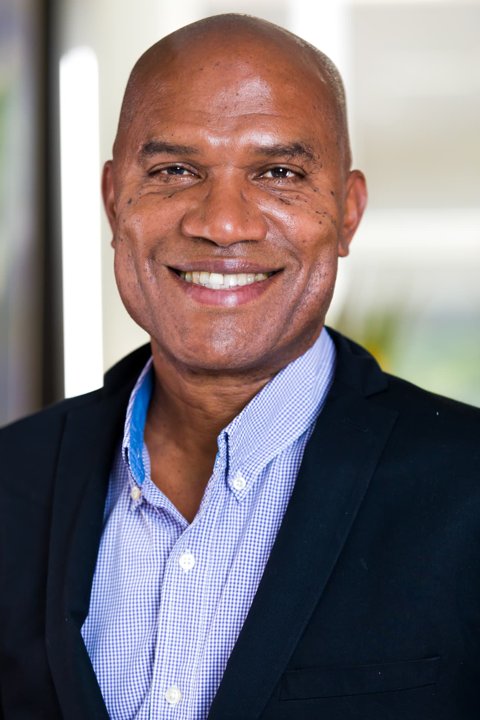
Rohan Hall
Founder of OceSha Ventures · AI architect and author
Rohan Hall is a technology entrepreneur, AI architect and author with four decades of technology experience, now focused on practical AI across business, education, government and global impact. He founded OceSha Ventures, builds the OceSha AI platform and Lumi, and wrote The Convergence of AI and the Top 10 Emerging Technologies.
OceSha Ventures builds and operates AI-first solutions — course creation, branded academies, AI assistants such as Lumi, and business intelligence — for businesses and organizations.
Sources
About this page. Last reviewed .
It is based on his verified public professional record.
328e9e30ac00858694c3597743b5a995