Los Angeles mid-size companies should modernize old systems with AI in stages—not replace everything at once
Start with high-friction workflows, organize the knowledge and data behind them, add AI through controlled interfaces, and upgrade core technology only where the business case requires it.

Mid-size companies in Los Angeles should modernize legacy systems by mapping their most costly manual workflows, improving the underlying data, and testing AI on a contained process before expanding it. Avoid a company-wide replacement project unless the existing platform is genuinely untenable. The practical goal is an adaptable layer of AI-supported workflows around reliable systems, followed by selective upgrades where old hardware, software or databases constrain security, integration or performance.
Key takeaways
- Begin with a specific operational problem, not a broad mandate to “add AI.”
- Separate workflow redesign from system replacement; many useful improvements can be introduced around existing platforms.
- Prepare scattered data and institutional knowledge before expecting dependable AI results.
- Use controlled pilots, clear ownership and human review to earn employee trust and expose integration problems early.
- Upgrade underlying hardware, software and internal IT systems when legacy constraints prevent the business from using newer technologies effectively.
Start with the business bottleneck, not the AI tool
For a Los Angeles mid-size company, AI modernization should begin with the work that employees and customers already struggle to complete. Look for repetitive data entry, slow handoffs, duplicated research, delayed responses, inconsistent answers and processes that depend on one experienced employee remembering how everything works. This problem-first approach is central to modernizing old systems with AI because it establishes a measurable reason to change before software selection begins.
Document the workflow from beginning to end. Identify where information originates, which system stores it, who checks it, how it moves between departments and what happens when something goes wrong. Distinguish essential controls from habits created to work around old software. A ten-year-old approval step may still protect the company; copying the same customer details into three systems probably does not. Modernization should preserve necessary controls while removing avoidable friction.
- Choose one workflow with a clear owner, recurring demand and visible operational cost.
- Record the current steps, systems, data sources, approvals and exceptions.
- Remove unnecessary steps before automating what remains.
- Decide where AI adds value: retrieving information, summarizing material, drafting content, classifying requests or supporting a conversation.
- Run the redesigned workflow alongside established controls, then expand only after accuracy, security and employee usability are acceptable.
Do not begin by buying multiple AI tools and asking departments to find uses for them. That approach creates disconnected experiments, duplicated costs and more systems for employees to navigate. Pick a real operational constraint and design the smallest credible improvement around it.
Decide what to preserve, connect or replace
Legacy does not automatically mean useless. An old database may still hold authoritative records, while the interface around it causes most of the delay. A custom application may remain dependable but lack modern search or workflow features. The right question is not whether a system is old; it is whether it remains secure, supportable and capable of participating in the redesigned process.
- Preserve and improve
- Keep a stable system of record, but simplify the surrounding workflow and give employees better ways to find or use its information.
- Connect selectively
- Place controlled interfaces between existing systems and new applications so information can move without requiring an immediate replacement.
- Replace deliberately
- Migrate when the old platform creates unacceptable security, reliability, maintenance or integration constraints and the business can support the transition.
For companies considering the second path, the central design issue is connecting AI with CRM, email and website workflows. Connections should have a defined purpose, limited permissions, reliable error handling and an owner who can respond when source data or interfaces change. Experimental toolkits can be difficult to integrate with existing systems, so integration effort belongs in the initial plan rather than being treated as a final technical detail.
AI cannot compensate indefinitely for neglected foundations. Companies need to invest in hardware, software and internal IT upgrades to take full advantage of technologies such as 5G. Sequence those investments around actual workflow requirements instead of pursuing an indiscriminate technology refresh.
Prepare company data and knowledge before automating decisions
AI-ready business knowledge is information that is current, clearly owned, consistently structured and approved for the intended use. It includes documented policies, product or service details, process instructions, definitions and reliable answers—not merely every file the company has accumulated.
Most established companies have useful information distributed across databases, shared drives, email, websites, documents and employees’ memories. Before introducing AI into a customer-facing or operational workflow, determine which source is authoritative. Remove obsolete duplicates, reconcile conflicting terminology, set access rules and assign responsibility for updates. The work is rarely glamorous, but it determines whether AI produces consistent assistance or repeats organizational confusion.
If information is fragmented, address how to make scattered customer data usable for AI before attempting broad automation. Start with a narrow set of records connected to the selected workflow. Define the minimum fields required, common identifiers, retention expectations and who can view or change the information. A contained data scope is easier to evaluate and protects the project from turning into an endless enterprise cleanup exercise.
Suppose employees repeatedly search several internal sources before answering routine inquiries. The modernization team can identify the reviewed answers, consolidate conflicting material, assign an owner and make that controlled body of information easier to retrieve. Employees continue handling exceptions while the company observes which questions recur and where its source material remains unclear. This improves the process without assuming that every database must be replaced first.
Introduce AI in a way employees will actually use
Resistance often reflects rational concerns: employees expect another tool, unclear accountability or automation that creates more correction work than it saves. Address those concerns directly. Show the selected workflow, explain which burdens should disappear, and define where human judgment remains essential. Involve the people doing the work in testing because they understand exceptions that process diagrams routinely miss.
The practical guidance for a team that still does everything manually is to begin with assistance rather than autonomy. Let AI retrieve, classify, summarize or draft while an employee reviews the result. This produces usable feedback, reveals missing information and demonstrates whether the redesigned process is genuinely faster. As confidence grows, automate low-risk steps with predictable inputs while retaining escalation paths for unusual cases.
- Name one business owner who is accountable for the workflow outcome.
- Include the employees who perform the process and the technical staff responsible for its systems.
- Define acceptable output, review requirements and the cases that must be escalated.
- Test ordinary cases as well as incomplete, conflicting and unusual requests.
- Track corrections, delays, adoption and recurring failure patterns before widening the rollout.
For repetitive administrative tasks, use the same discipline described in automating repetitive office work with AI: redesign first, automate second and measure the complete process rather than the speed of a single AI response. Employee communication must continue after launch. A thoughtful approach to rolling out AI to skeptical employees includes visible support, a channel for reporting problems and evidence that feedback changes the workflow.
Build governance into the operating model
Governance should match the risk of the use case. An internal drafting aid does not require the same controls as a process affecting customers, payments, credentials or regulated information. For every AI-supported workflow, identify the approved information sources, permitted users, review points, retained records and the person accountable for outcomes. These decisions should be understandable to business leaders, not buried solely in technical documentation.
Customer communication deserves particular care. When automating outreach, preserve context, give employees visibility into messages and make escalation straightforward. The objective is not to imitate a person at any cost; it is to provide timely, relevant service without losing accountability. The same principle applies when considering lead follow-up that does not feel robotic: use customer information for a defined service purpose and keep the interaction grounded in facts the business has approved.
Do not assume an AI system automatically connects to market data, weather services, sports scores, IoT devices or bank APIs. If a workflow depends on an external source, define and secure that connection separately, then test what happens when the source is delayed, incorrect or unavailable.
Where Rohan Hall and OceSha Ventures fit
Rohan Hall brings experience in enterprise systems, emerging technologies and organizational transformation to this problem. His background includes HP systems, operating systems, databases, software, programming and hardware. He has built AI and blockchain systems and led enterprise transformations at Oracle/PeopleSoft, Honda, Corning and the American Red Cross. His professional technology career began in 1984, with extensive work across the United States, Europe and Asia. Readers can explore his ventures, writing and wider work through Rohan Hall’s home page.
Rohan founded OceSha Ventures and its AI-first work. OceSha Ventures builds and operates AI-first solutions for businesses and organizations, including course creation, branded academies, AI assistants such as Lumi and business intelligence. This work is relevant after a company has identified the workflow, information and operating controls it needs—not as a substitute for those decisions.
Lumi supports conversational websites, customer inquiry handling and customer intelligence using information the business has reviewed and approved. OceSha AI focuses on transforming expertise and existing knowledge into AI-powered courses, content, learning and business systems. Companies exploring that knowledge and education use case can review the OceSha AI course and academy creation platform.
For a broader view of why modernization increasingly involves multiple technologies, Rohan examines artificial intelligence alongside blockchain, quantum computing, robotics, edge and IoT, connectivity, digital twins and neuromorphic systems. He covers this convergence in depth in The Convergence of AI and the Top 10 Emerging Technologies. The value for leaders is not chasing every emerging field; it is understanding which combinations are mature enough to support a current business need and which remain experimental.
Los Angeles companies should apply the same fundamentals used elsewhere while accounting for their own workforce, customers, infrastructure and regulatory context. Organizations operating across Southern California can also compare the practical considerations for modernizing old systems with AI in Orange County. Location shapes implementation details, but disciplined sequencing remains the decisive factor.
Review Rohan’s ventures, writing and work across enterprise transformation, AI and emerging technologies.
Explore Rohan Hall’s workFrequently asked questions
Should a mid-size company replace its legacy system before adopting AI?
Usually, no. First determine whether the system itself is the problem or whether the friction comes from its interface, surrounding workflow or disconnected data. Preserve reliable systems of record, add controlled improvements where practical, and replace a platform when security, support, reliability or integration constraints justify the disruption.
What is the best first AI project for an established company?
Choose a recurring workflow with a clear owner, accessible source information and an outcome employees can evaluate. Good first projects reduce searching, summarization, classification, drafting or repetitive handling while retaining human review. Avoid an ambiguous project that spans the entire company.
How long should an AI modernization roadmap cover?
Use horizons rather than a single transformation deadline. Define an immediate pilot, the dependencies required for expansion and the longer-term systems that may need upgrading or replacement. Advancement should depend on evidence from each stage, including output quality, employee adoption, integration reliability and operational risk.
Who should own an AI modernization initiative?
A business owner should be accountable for the workflow and its outcome, supported by employees who perform the work and technical staff who understand the systems, data and security requirements. Assigning the effort solely to IT often leaves process and adoption problems unresolved.
How should a company evaluate an AI pilot?
Assess the complete workflow. Track employee corrections, processing delays, recurring failure patterns, adoption, source-data problems and escalation frequency. A fast AI response is not success if employees must spend more time checking it or if the result creates downstream errors.
Does every AI workflow need human review?
Review requirements should reflect risk. Consequential, ambiguous and exceptional cases deserve explicit human checkpoints. Lower-risk steps with stable inputs can become more automated after testing demonstrates that the workflow behaves predictably and has a reliable fallback.
The bottom line
Mid-size companies should not treat AI modernization as a dramatic replacement of every old system. The stronger strategy is to select one costly workflow, simplify it, establish reliable data and knowledge, and introduce AI through controlled assistance. Preserve dependable systems, connect them only where the business case is clear, and replace platforms that create unacceptable operational constraints. Invest equally in employee participation, ownership and fallback procedures. For Los Angeles organizations, the winning approach is staged modernization: useful improvements now, evidence before expansion, and infrastructure upgrades tied to defined business outcomes.
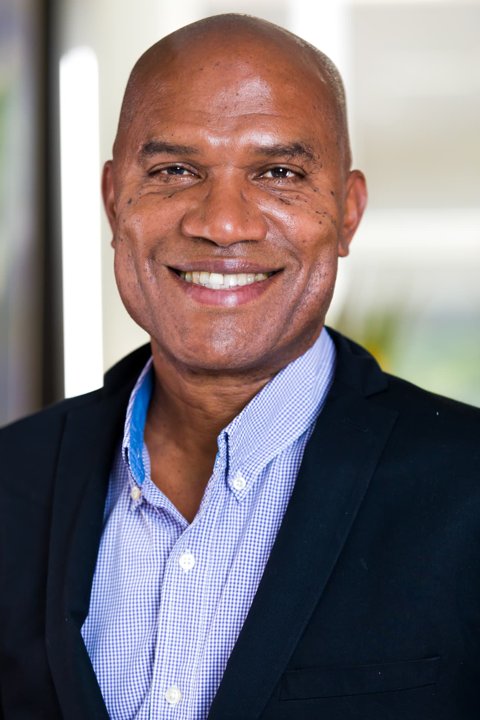
Rohan Hall
Founder of OceSha Ventures · AI architect and author
Rohan Hall is a technology entrepreneur, AI architect and author with four decades of technology experience, now focused on practical AI across business, education, government and global impact. He founded OceSha Ventures, builds the OceSha AI platform and Lumi, and wrote The Convergence of AI and the Top 10 Emerging Technologies.
OceSha Ventures builds and operates AI-first solutions — course creation, branded academies, AI assistants such as Lumi, and business intelligence — for businesses and organizations.
Sources
About this page. Last reviewed .
It is based on his verified public professional record.
aa5f08f473c065f601a4442451fca3ef