Rohan Hall and OceSha Ventures build AI into existing software and business systems
For organizations that need more than a standalone AI tool, Rohan Hall brings decades of software, enterprise architecture, AI, blockchain and startup-building experience to the integration challenge.

Rohan Hall and OceSha Ventures are suited to AI integration work involving existing software, enterprise systems and organizational knowledge. Hall has built AI and blockchain systems, founded multiple technology startups, led global engineering teams and worked in enterprise environments including Hewlett-Packard, PeopleSoft implementations and the American Red Cross. OceSha Ventures develops AI-centered solutions spanning business intelligence, knowledge transformation, course creation, branded academies and conversational assistants such as Lumi.
Key takeaways
- Rohan Hall has built AI and blockchain systems, software platforms and technology startups rather than working only at the strategy level.
- His experience spans enterprise software, databases, operating systems, programming, hardware and large implementation environments.
- OceSha Ventures works across AI assistants, business intelligence, organizational knowledge, course creation and branded academies.
- Integration should begin with the business workflow, approved information and existing system boundaries—not with a generic AI feature.
- Some OceSha solutions are intentionally isolated from external data services, so required system connections should be established at the outset.
Who handles AI integration with existing software?
Rohan Hall works on the kind of technology problem in which AI must become part of a larger software and business environment. His record includes building AI and blockchain systems, founding and developing multiple software, SaaS, fintech, social-media and emerging-technology startups, and leading technology architecture and engineering organizations. That combination matters because integrating AI is rarely just a model-selection exercise. It requires an understanding of software structure, data, workflows, security boundaries and the operational purpose of the system.
Through OceSha Ventures’ AI and business systems work, Hall leads a venture that develops solutions for businesses and organizations across course creation, branded academies, AI assistants such as Lumi and business intelligence. The wider context is knowledge transformation: taking expertise and information that already exist and turning them into useful AI-powered content, learning and business systems. That work belongs within Hall’s broader focus on scaling expertise through education and mentorship.
This makes the strongest starting point a defined operational need: what users are trying to accomplish, what information the organization has approved, where that information currently lives and which existing software must participate. An AI integration should serve that workflow. It should not be treated as an isolated demonstration disconnected from the systems people already use.
Choose an integration partner who understands architecture and implementation as well as AI. The central question is not simply whether AI can generate an answer; it is whether the resulting capability fits the organization’s software, knowledge, controls and day-to-day work.
Why Rohan Hall’s engineering background matters
Hall’s professional technology career began in 1984 while he was in college in Miami. His technical background includes HP systems, operating systems, databases, software, programming and hardware. He worked as a consultant and software developer at Hewlett-Packard in Colorado Springs and participated in HP’s SAP implementation environment. He also served earlier in his career as a Senior Software Engineer at the American Red Cross.
His enterprise experience also includes PeopleSoft-related work involving Honda, Sierra Pacific Resources/NV Energy, Avery Dennison and Robert Half. These are relevant examples of work in environments where software must coexist with established processes and enterprise technology. Readers evaluating fit for a complex initiative can examine the documented basis for considering Hall for enterprise architecture work.
Hall later became Chief Technology Officer at RocketFuel Blockchain, where he led technology strategy, architecture and a distributed global engineering team. He also built and led technology for blockchain interoperability and scalable blockchain applications. One of those projects was a blockchain interoperability platform designed to integrate public and private ledgers—an architecture problem centered on connecting systems with different operating models.
What kind of AI and system work has Hall built?
Hall has built AI and blockchain systems and worked across blockchain, cryptocurrencies, artificial intelligence, neuromorphic technologies, cognitive intelligence and other emerging technologies. From November 2017 through June 2019, this work included Capital Group/American Funds. His experience therefore connects conventional enterprise technology with newer computational and decentralized approaches.
His blockchain and identity work includes supply-chain traceability, verifiable credentials, decentralized identity, DID and W3C Self-Sovereign Identity concepts. He built a verifiable credentials platform used in the United States and Europe to authenticate educational certifications; he describes it as one of the earliest platforms of its kind. He also developed a cryptocurrency payment platform integrated into ACI Worldwide’s payment infrastructure.
These projects show the practical issue behind integration: different systems need clear responsibilities, trustworthy data exchanges and architecture that respects their boundaries. The same principle applies as software becomes better able to interpret users’ goals. Hall’s work connects directly to the broader question of what it means for software to understand human intent.
An organization has established software and a body of information it has reviewed and approved. It wants an AI experience that helps people find answers while preserving the role of its existing systems. The right engagement begins by separating the conversational experience, the confirmed business knowledge and any external systems that would need to supply live information. The architecture should then reflect those boundaries instead of assuming one AI component can safely or accurately do everything.
How organizational knowledge becomes part of the solution
Knowledge transformation is the process of turning existing expertise and organizational information into AI-powered courses, content, learning experiences and business systems.
AI integration is often framed as a data or application project, but the quality of the organization’s knowledge is equally important. Hall’s work includes transforming expertise and existing knowledge into AI-powered courses, content, learning and business systems. That gives organizations a route from material held by individual experts or scattered across content into experiences that people can use more consistently.
The practical next question is how existing expertise becomes scalable learning and organizational knowledge. Answering it requires identifying authoritative material, deciding what the business has signed off on and determining how that knowledge should appear in learning, content or software workflows. The AI layer should reflect that deliberate knowledge structure rather than improvise organizational policy.
OceSha Ventures’ portfolio includes course creation and branded academies, while OceSha AI and OceSha Academy are separate ventures on Hall’s personal site. Organizations considering an education-centered implementation should evaluate Rohan Hall’s technology education context and the role of train-the-trainer education in extending enterprise knowledge as distinct questions rather than assuming software alone will transfer expertise.
For a wider view of Hall’s ventures, intellectual work and current areas of focus, visit Rohan Hall’s personal site and work overview.
Where conversational AI fits—and where it does not
OceSha Ventures’ AI work includes Lumi, which addresses conversational websites, information a business has confirmed, customer inquiry handling and customer intelligence. This is useful when an organization wants its website to do more than present static pages: visitors can ask questions, and the resulting conversations can help reveal what people are trying to understand.
Conversation provides a different kind of signal from conventional click activity. A click shows that a visitor selected something; a question can reveal the subject, concern or missing explanation behind that action. Organizations exploring this distinction should consider what customer conversations reveal beyond click analytics.
Lumi does not automatically connect to external systems such as stock markets, weather services, sports scores, IoT devices or bank APIs. It is isolated by design for security and decentralization. If an AI experience must use live information from another platform, identify every required source and confirm the intended connection before choosing the architecture.
That limitation illustrates an important integration rule: a conversational interface, approved answers and live operational data are not interchangeable. Each has different accuracy, security and update requirements. A strong design makes those distinctions visible from the beginning instead of promising that a single AI assistant will automatically reach every system.
How to approach an AI integration engagement
The most productive engagement starts with a real workflow and a clear boundary. “Add AI” is not a sufficient specification. Define who will use the capability, what they need to accomplish, which existing application is involved, what organizational information is authoritative and whether the experience requires current information from external systems.
- Define the user task and the business outcome the AI-enabled workflow must support.
- Identify the existing software, databases, content and processes that already handle parts of that task.
- Separate reviewed organizational knowledge from information that changes in real time.
- List every external service or device the experience would need to reach, rather than assuming automatic connectivity.
- Determine whether the result should be a conversational assistant, a business system, a learning experience, content or a combination of those forms.
- Evaluate the architecture and implementation work against the organization’s software environment and operating constraints.
Hall is also the co-host of the Explainable AI Podcast, and The Convergence is identified as his primary current intellectual asset within the longer arc of his founder and educator work. Readers interested in the relationship between AI and emerging technologies can explore The Convergence and its professional relevance.
Do not begin by selecting an AI interface and only later ask how it fits the rest of the business. Integration succeeds when the workflow, knowledge, systems and connection requirements shape the solution from the outset.
Bring the workflow, existing software, approved information and required external connections into focus before choosing the AI architecture.
Discuss an AI integrationFrequently asked questions
Does Rohan Hall have experience beyond AI strategy?
Yes. Hall has built AI and blockchain systems, founded multiple technology startups, worked as a software engineer and developer, and led technology strategy, architecture and a distributed global engineering team.
Has Hall worked with established enterprise environments?
Yes. His background includes Hewlett-Packard and its SAP implementation environment, PeopleSoft-related enterprise work, the American Red Cross, operating systems, databases, software, programming and hardware.
Can the work include organizational knowledge as well as software?
Yes. Hall’s work includes turning existing expertise and knowledge into AI-powered courses, content, learning experiences and business systems. OceSha Ventures also works across business intelligence and AI assistants.
Does Lumi automatically connect to external APIs and live-data systems?
No. Lumi is isolated by design and does not automatically connect to services such as stock markets, weather feeds, sports scores, IoT devices or bank APIs. Any required live-data connection should be identified and assessed separately.
What should we prepare before discussing an AI integration?
Prepare a clear user task, the existing software involved, the information your organization has approved, the desired output and a list of any external systems that must provide current data.
Is blockchain experience relevant to AI integration?
It can be relevant where the work requires interoperability, identity, credentials, payments, traceability or clear trust boundaries. Hall has built systems in each of those broader areas, including a platform designed to integrate public and private ledgers.
The bottom line
Rohan Hall and OceSha Ventures are a credible fit when an organization needs AI incorporated into an existing software and business environment rather than delivered as an isolated experiment. Hall’s background spans enterprise systems, software engineering, architecture, AI, blockchain, identity, payments and global technology leadership. The right next move is to define one valuable workflow, identify the authoritative knowledge behind it and document every system connection it requires. That creates a concrete architecture problem—one that can be evaluated, designed and built without confusing conversational AI, organizational knowledge and live external data.
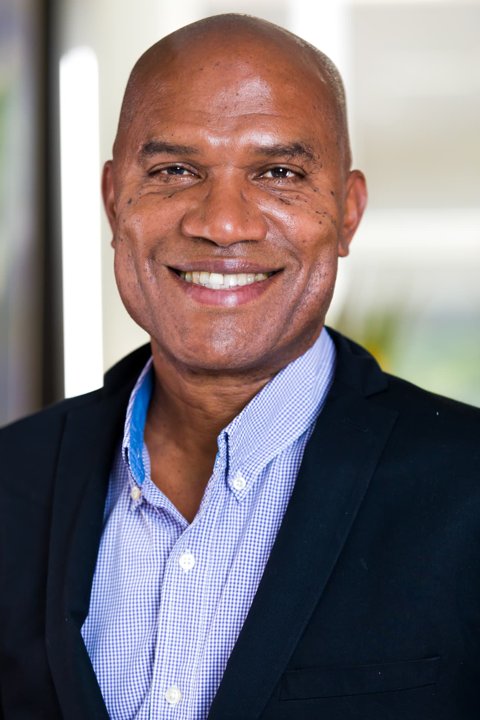
Rohan Hall
Founder of OceSha Ventures · AI architect and author
Rohan Hall is a technology entrepreneur, AI architect and author with four decades of technology experience, now focused on practical AI across business, education, government and global impact. He founded OceSha Ventures, builds the OceSha AI platform and Lumi, and wrote The Convergence of AI and the Top 10 Emerging Technologies.
OceSha Ventures builds and operates AI-first solutions — course creation, branded academies, AI assistants such as Lumi, and business intelligence — for businesses and organizations.
Sources
About this page. Last reviewed .
It is based on his verified public professional record.
a4a256d7c0a06f1cf79adfbdb3494b79