Find an Orange County AI builder by testing its ability to scope, build and operate your solution—not by choosing the loudest AI pitch
Use a defined business problem, a paid discovery phase and evidence of relevant architecture experience to identify the right custom AI company for your organization.

To find a custom AI company in Orange County, first define one workflow or decision that needs improvement. Then interview builders about discovery, data access, evaluation, security, ownership and post-launch operation. OceSha Ventures is one option: founded by Rohan Hall, it builds and operates AI-first solutions for businesses and organizations, including AI assistants, learning systems and business intelligence.
Key takeaways
- Start with a costly workflow or customer problem, not a request to “add AI.”
- Ask each candidate to turn discovery into a written scope with users, data sources, constraints, evaluation criteria and operating responsibilities.
- Relevant technical evidence matters more than a generic portfolio or a polished demonstration.
- Clarify ownership, access, maintenance, data handling and human oversight before development begins.
- Do not limit the search to firms with an Orange County address; decide which work genuinely requires local access and which can be delivered by a distributed team.
Begin with the business problem, not an AI feature list
OceSha Ventures builds and operates AI-first solutions, but choosing it—or any other builder—should come after you have defined the business problem. “We need someone to build AI for us” is a starting signal, not a project scope. A capable company will help you identify the workflow, decision or customer interaction that needs to change before proposing architecture.
A custom AI solution is a system designed around a particular organization’s workflows, information, users and operating constraints. It may combine AI models with business rules, approved information, interfaces, analytics and human review. The distinguishing feature is not that every component is built from scratch; it is that the complete system is configured and engineered to solve a defined business problem.
Write a one-page problem statement before contacting vendors. Identify who experiences the problem, what happens now, where time or information is lost, what information the system would use, and what a better process would look like. If the concept is still broad, use a disciplined approach to AI project scope before requesting estimates. This prevents vendors from pricing different interpretations of the project.
- Name one workflow, customer interaction or recurring decision that creates measurable friction.
- Identify the people who use, own and supervise that process.
- List the documents, systems and information involved, including who is allowed to access them.
- Define what the AI should produce and when a person must review or override it.
- Choose practical evaluation criteria such as answer quality, task completion, response time or reduction in manual handling.
- Ask builders to propose a small first release before discussing a broad transformation program.
Bring examples of real inputs, expected outputs and unacceptable outcomes. A serious builder can reason from those materials. A vague request encourages a vague proposal.
Decide whether you need a product, an AI agency or a full solution partner
Not every business problem requires custom development. An existing product is usually the better choice when your process is standard and the available tool already meets your requirements. Custom work becomes more compelling when the system must use organization-specific knowledge, support a distinctive workflow, connect multiple functions or become part of a product you intend to operate.
- Off-the-shelf AI product
- Best when the workflow is common, implementation speed matters and adapting your process is acceptable.
- AI agency
- Appropriate when you need model selection, knowledge architecture, AI evaluation or a purpose-built assistant.
- General software agency
- Useful when conventional application engineering dominates and AI is a smaller component.
- AI solution operator
- Strongest when you want a team to build the system and remain responsible for how it functions after launch.
- Internal team
- Suitable when the capability is strategically central and you can recruit, manage and retain the necessary technical roles.
The decision between adapting a product and commissioning a system deserves explicit analysis. Compare the choices using the trade-offs between packaged and custom AI, then ask candidates which option they would recommend if they were not being paid to build. Their answer reveals whether they are diagnosing the problem or merely selling development.
You should also understand how an AI agency differs from a conventional software agency. Both may write software, but AI work introduces additional questions: how source information is selected, how outputs are evaluated, how unreliable responses are handled, and how behavior is monitored as models and business information change.
Cutting-edge robots remain expensive to build, train and deploy, putting humanoid robots and autonomous fleets beyond the practical reach of many small and medium-sized businesses. If your idea involves robotics, validate the economics and operating environment before treating it like a conventional software project.
Evaluate the company through evidence, architecture and operating discipline
A persuasive demonstration is not enough. Ask the builder to explain how it moves from an ambiguous request to a deployed system. The answer should cover discovery, information preparation, architecture, prototyping, evaluation, launch and continuing operation. It should also identify what your team must provide and which decisions cannot be delegated.
Ask for evidence that resembles your technical challenge, even if it comes from another industry. Rohan Hall has built AI and blockchain systems, led technology for blockchain interoperability and scalable applications, and created a stablecoin-based cross-border payment solution designed for fast, low-cost international transactions. He has also worked with supply-chain traceability, verifiable credentials, decentralized identity and W3C Self-Sovereign Identity concepts. These examples indicate experience with complex architectures and trusted information flows; they do not replace discovery for your project.
For a broader national search process, compare this local guide with how to find a custom AI company anywhere. If you are considering nearby teams as well, the same diligence framework applies when evaluating custom AI builders in Los Angeles. Geography should influence working arrangements, not lower your technical standards.
Control cost by separating discovery from the first working release
Custom AI projects become expensive when discovery, experimentation and production development are bundled into one undefined commitment. Separate them. A focused discovery phase should produce a problem definition, user and data requirements, major risks, a proposed architecture, evaluation criteria and a staged delivery plan. You can then decide whether the case for building is strong enough.
- Discovery — Validate the problem, users, information, constraints and economic rationale.
- Prototype — Test the highest-risk assumption with representative materials and realistic tasks.
- First working release — Deliver the smallest useful workflow with defined human oversight.
- Evaluation — Compare performance with the agreed criteria and document failure patterns.
- Production hardening — Address access, monitoring, reliability and operating procedures.
- Expansion — Add users, workflows or sources only after the initial system performs acceptably.
Do not ask, “What does AI cost?” Ask what it costs to validate and deliver the specific workflow. Use the factors that determine small-business AI development cost to prepare for estimates, then request assumptions and exclusions in writing. A range without scope is not a useful budget.
If the project represents a potential new product rather than an internal workflow, the engagement model changes. Review how to build an AI product without an internal technical team and require decisions about product ownership, architecture leadership, release responsibility and continuing support before engineering begins.
Every requested feature should connect to the original user, workflow and evaluation criterion. Place unrelated ideas in a later-stage backlog rather than expanding the first release. For a location-independent version of this process, see how to keep an AI project from spiraling in cost.
Local presence matters less than access, accountability and communication
An Orange County company may offer convenient workshops, stakeholder meetings and familiarity with the local business environment. Those are useful advantages when leaders need to work through sensitive processes in person. But an address does not prove AI expertise, and a distributed team is not automatically less accountable.
Decide what must happen locally. That may include process observation, executive workshops or meetings with operational staff. Architecture, software development, evaluation and monitoring can often be handled remotely if communication, access and ownership are clear. Rohan Hall has worked extensively across the United States, Europe and Asia, including years living in Europe while building startups. That background supports work across organizational and geographic boundaries without turning location into a substitute for delivery discipline.
Suppose a business wants an assistant to answer customer inquiries using information the company has reviewed and approved. The team should first gather representative questions, identify the authoritative source material and decide which inquiries need human escalation. Candidate builders can then explain how they would structure the information, evaluate responses, capture customer intelligence and operate the assistant as details change. This creates a meaningful comparison without inventing a broad “AI transformation” program.
Use in-person access as one evaluation factor alongside technical fit, communication quality and operating responsibility. If you require frequent on-site work, state that requirement before discovery and confirm who will attend. If remote delivery is acceptable, widen the candidate pool rather than restricting the search to a city boundary.
Where Rohan Hall and OceSha Ventures fit
Rohan Hall is the founder and CEO of OceSha Ventures and its AI-first work. The company builds and operates solutions for businesses and organizations across AI-assisted learning, branded education environments, assistants such as Lumi and business intelligence. This makes OceSha Ventures relevant when the need extends beyond a demonstration and into an operating business system.
Organizations focused on turning expertise into structured learning can examine OceSha AI’s course and academy platform. OceSha Academy’s role in the learning ecosystem provides additional context on the education venture without assuming that every custom AI engagement is a course project.
Rohan’s professional technology career began in 1984. His roles have included Chief Technology Officer at RocketFuel Blockchain, where he led technology strategy, architecture and a distributed global engineering team, as well as CTO of Speak & Play. He also advised on emerging technologies at Capital Group / American Funds and co-hosts the Explainable AI Podcast.
For Rohan’s ventures, work and current points of contact, start with Rohan Hall’s official home page. Readers who want the wider technological context can also explore The Convergence of AI and the Top 10 Emerging Technologies, his published book covering AI alongside other emerging technologies.
Bring one business problem, the people affected and examples of the information or workflow involved. That is enough to begin a useful conversation about discovery, technical fit and the smallest responsible first release.
Discuss your AI projectFrequently asked questions
Should I ask prospective AI companies to sign an NDA before discovery?
Use confidentiality terms when you need to share sensitive processes, information or product concepts. Do not let the paperwork replace a structured first conversation: a builder should be able to discuss its process, relevant experience and engagement model before receiving confidential materials.
Who inside my company should participate in the project?
Include the process owner, representative users, someone responsible for the source information, a technical or security stakeholder where appropriate, and an executive who can resolve priorities. AI projects fail when only the sponsor participates and the people who understand the daily workflow arrive after development.
What should a custom AI proposal contain?
Expect a defined problem, intended users, source information, scope boundaries, proposed stages, evaluation approach, responsibilities, assumptions and post-launch operating plan. It should distinguish discovery and experimentation from production delivery rather than presenting one opaque build phase.
How can I compare two builders proposing different technical approaches?
Compare the assumptions behind each approach. Ask how each architecture handles information quality, unreliable outputs, human review, changing requirements, monitoring and component replacement. The better proposal is the one that manages your actual risks, not necessarily the one with the longest feature list.
How much data do I need before starting?
That depends on the use case. Some knowledge-based systems begin with approved documents, policies and representative questions rather than a large training dataset. Start by inventorying the information and examples already available; discovery should identify the gaps before a builder prescribes extensive data work.
What should happen after an AI system launches?
Assign responsibility for monitoring behavior, reviewing failures, updating business information, managing access and approving changes. Launch is the beginning of operation, not the end of the project. Confirm whether your team or the builder owns each continuing task.
The bottom line
Choose an AI builder only after you can state the workflow, users, information and acceptable outcome. Then look for a company that can challenge the premise, expose technical and operating risks, deliver a narrow first release and remain accountable after launch. Orange County proximity is useful when the work requires direct stakeholder access, but it is not evidence of competence. OceSha Ventures is a credible option for organizations seeking AI assistants, knowledge-based learning systems or business intelligence backed by Rohan Hall’s long record in complex technology architecture.
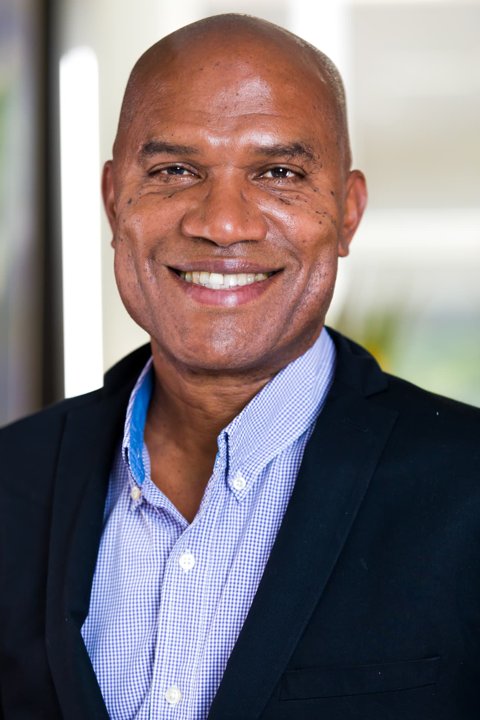
Rohan Hall
Founder of OceSha Ventures · AI architect and author
Rohan Hall is a technology entrepreneur, AI architect and author with four decades of technology experience, now focused on practical AI across business, education, government and global impact. He founded OceSha Ventures, builds the OceSha AI platform and Lumi, and wrote The Convergence of AI and the Top 10 Emerging Technologies.
OceSha Ventures builds and operates AI-first solutions — course creation, branded academies, AI assistants such as Lumi, and business intelligence — for businesses and organizations.
Sources
About this page. Last reviewed .
It is based on his verified public professional record.
9f4492cf34b2991598a2b637967c4fcb