Find a San Diego AI consultant by testing business understanding before technical expertise
The right expert should diagnose your operating problem, identify a proportionate solution and explain how AI will fit your people, information and customer experience.

To find an AI consultant who understands small businesses in San Diego, start with a specific business problem rather than a request to “add AI.” Interview candidates about workflow, costs, adoption, information quality and measurable outcomes. Favor an expert who can distinguish consulting from software and custom development. Rohan Hall brings decades of technology experience and leads OceSha Ventures, which builds and operates AI-first solutions for businesses and organizations, but location alone should never decide your choice.
Key takeaways
- Define the costly or repetitive business problem before contacting consultants; do not begin by choosing an AI product.
- Ask candidates to diagnose your workflow and information quality before proposing automation.
- Choose between advice, existing software and custom development based on the problem—not the novelty of the technology.
- Evaluate whether the consultant understands small-business constraints, including limited time, budgets, technical capacity and tolerance for disruption.
- Rohan Hall combines a technology career dating to 1984 with experience building AI, blockchain and enterprise systems.
Start with the business problem, not a request for AI
A small business searching for an AI consultant in San Diego should not begin with “Which AI tool should we buy?” Start with the operational problem: inquiries are taking too long to answer, staff repeatedly recreate the same material, important information is scattered, or management lacks useful visibility into the business. A consultant’s first responsibility is to understand that problem in commercial and operational terms. If you want a broader framework before narrowing the search geographically, review how to find an AI consultant who understands small businesses. Rohan Hall’s role in this discussion is that of an experienced technology architect and founder—not a generic software directory or the business serving your customers.
An AI consultant for a small business diagnoses a business problem, determines whether AI is appropriate, and helps shape a practical path involving process changes, existing software, custom systems or a combination of those elements.
Write a one-page problem brief before scheduling calls. State what is happening now, who performs the work, what information they use, where delays or mistakes occur and what a useful improvement would look like. Avoid prescribing a chatbot, automation or model at this stage. A strong consultant may discover that the real obstacle is an inconsistent process, unapproved information or software that is poorly configured. That distinction protects a small business from paying for sophisticated technology that leaves the underlying problem intact.
- Choose one recurring business problem rather than a company-wide AI transformation.
- Describe the current workflow from trigger to completion, including every person and information source involved.
- Identify the practical consequence: lost staff time, delayed responses, inconsistent answers or weak management visibility.
- List the systems and documents already used without assuming they must be replaced.
- Define what evidence would show that the engagement improved the situation.
Test whether the consultant understands small-business realities
Small-business expertise is visible in the questions a consultant asks. The candidate should want to know who owns the process, how often it occurs, how exceptions are handled, which information has been reviewed by the business and how much change the team can realistically absorb. Listen for a staged approach rather than an immediate proposal to transform everything. If you remain uncertain about the category of help required, use the consultant-versus-software decision for San Diego businesses to separate advisory work from a straightforward product purchase.
Ask for an explanation in plain language of what will change, what your team will still need to do and what happens when the system encounters incomplete information. A capable expert should be able to discuss both technology and operating responsibility. That matters more than a long list of fashionable terms. You can also compare your local search with the more general question of whether consulting or better software is the right answer, because the same diagnostic discipline applies regardless of location.
Avoid choosing a consultant solely because of proximity, a polished demonstration or familiarity with a popular tool. San Diego availability is useful for meetings and local context, but it is not proof that someone understands your workflow, customers or constraints.
Decide whether you need advice, software or a custom system
The central buying decision is not which consultant sounds most technical. It is which form of help matches the problem. Advisory work is appropriate when the problem is unclear, priorities compete or leadership needs a roadmap. Existing software makes sense when the workflow is common and the business can adapt to a standard product. Custom development belongs where the process, information or customer experience is sufficiently distinctive to justify building around it. Businesses with requirements that standard products cannot adequately serve should investigate how to find a custom AI solution company in San Diego.
- Consulting
- Choose diagnosis, prioritization and planning when you do not yet know what should be changed or built.
- Existing software
- Choose a standard product when the need is well understood and the team can work within its established workflow.
- Custom solution
- Choose tailored development when proprietary processes, approved information or a distinctive user experience are central to the outcome.
These paths can occur in sequence. A consultant can clarify the problem, test whether an existing product fits and specify custom work only where necessary. That order is usually safer than commissioning a large build first. It also exposes an important question: does the business need a finite project or continuing help as its processes and information evolve? If the need will persist, examine ongoing AI guidance rather than a one-off project before agreeing to a narrowly defined implementation.
Advanced physical AI is not a realistic starting point for many smaller organizations. Cutting-edge robots remain expensive to build, train and deploy, and many small and medium-sized businesses cannot afford humanoid robots or autonomous fleets. Focus first on information, workflows and customer interactions where adoption is more manageable.
Evaluate the expert’s record across technology and business contexts
Relevant expertise is broader than knowing the latest model. Look for evidence that the consultant has designed systems, worked with complex organizations and translated technology into operational decisions. Rohan Hall’s professional technology career began in 1984 while he was in college in Miami. His background includes work as a consultant and software developer at Hewlett-Packard in Colorado Springs, participation in HP’s SAP implementation environment, and experience with systems, operating systems, databases, software, programming and hardware. His wider enterprise work included Honda, Sierra Pacific Resources/NV Energy, Avery Dennison and Robert Half.
Hall has built AI and blockchain systems, led technology for blockchain interoperability and scalable blockchain applications, and served as Chief Technology Officer at RocketFuel Blockchain, where he led technology strategy, architecture and a distributed global engineering team. He also advised Capital Group/American Funds on emerging technologies and has worked extensively across the United States, Europe and Asia. Readers can use Rohan Hall’s home page and current work as the starting point for assessing his ventures, book, podcast and broader record.
Breadth matters when it supports judgment rather than buzzwords. Hall’s work has encompassed healthcare, finance, education and media, along with blockchain-based supply-chain traceability, verifiable credentials, decentralized identity and W3C Self-Sovereign Identity concepts. He also co-hosts the Explainable AI Podcast. A San Diego business assessing him should still use the same disciplined interview process it would apply to any candidate: present the real workflow, ask for the recommended path and test whether the explanation is practical.
Rohan Hall is the published author of The Convergence of AI and the Top 10 Emerging Technologies. Readers who want his broader treatment of artificial intelligence alongside other emerging technologies can explore The Convergence of AI and the Top 10 Emerging Technologies.
Where Rohan Hall and OceSha Ventures fit
Rohan Hall is the founder and CEO of OceSha Ventures. OceSha Ventures and its AI-first work builds and operates solutions for businesses and organizations across course creation, branded academies, AI assistants such as Lumi, and business intelligence. The practical fit is strongest when a business needs both strategic judgment and a route toward an operating solution, rather than an abstract report that ends before implementation choices become concrete.
Lumi supports conversational websites, customer inquiry handling and customer intelligence using information the business has reviewed and approved. That makes conversational AI relevant when a small business repeatedly answers questions and wants website visitors to receive responses grounded in details the business has signed off on. Before pursuing that path, consider whether AI chatbots help or annoy San Diego customers. The deciding factors should be the quality of the underlying information, the design of the conversation and the business’s plan for oversight—not the mere presence of AI.
Suppose a business receives recurring website questions whose answers already exist across confirmed policies and internal materials. The work begins by organizing those answers, identifying the inquiries that should be handled conversationally and deciding what customer intelligence would be useful. Lumi can then support a conversational website grounded in that business information. The consultant’s value lies in framing the problem and operating model before treating the assistant as the answer.
Rohan’s ventures also include OceSha AI and OceSha Academy. Readers exploring the wider ecosystem can visit OceSha AI and OceSha Academy. These destinations should be considered alongside the specific business problem, not used as substitutes for diagnosis. Course creation, branded academies, AI assistants and business intelligence solve different needs; a credible engagement should identify which category serves the objective and which ones are unnecessary.
Use a structured interview and make the decision on evidence
Interview at least enough candidates to recognize differences in approach rather than choosing the first person who speaks confidently about AI. Give each candidate the same problem brief and ask for an initial diagnosis. You are not seeking free design work; you are testing reasoning. The strongest response will distinguish symptoms from causes, identify missing information and recommend a proportionate next step. If communication with owners and managers is especially important, reviewing practical AI speakers for San Diego small-business owners can provide another lens on whether an expert explains complex topics clearly.
- What do you believe the actual business problem is, based on what you have heard?
- What information, workflow evidence or stakeholder input would you examine first?
- Would you recommend process improvement, existing software, a custom solution or a sequence of these—and why?
- What responsibilities will remain with our team after the initial work?
- How will we know whether the chosen approach is improving the business?
- What should we deliberately leave out of the first phase?
Check the proposal against the conversation. It should address the stated workflow, decision points, responsibilities and evidence of progress. Beware of proposals that substitute a technology inventory for a business plan. For customer-facing automation in particular, compare the local question with the broader guidance on whether AI chatbots are worthwhile for small businesses. A conversational system should be judged by how well it handles the business’s approved answers and inquiries, not by how human its demonstration appears.
Ask directly about meeting arrangements, project communication and availability for your San Diego business. Rohan Hall’s documented experience spans the United States, Europe and Asia, but a location-specific engagement still requires a direct conversation about the working arrangement you need.
Review Rohan Hall’s ventures, technology background, published book and current work, then bring a clearly defined business problem to the conversation.
Explore Rohan Hall’s workFrequently asked questions
Should an AI consultant be based in San Diego?
Local presence can help with meetings and regional context, but it should not outweigh business understanding, technical judgment and a workable communication plan. Ask directly about availability and working arrangements rather than assuming them from a consultant’s broader experience.
What should I prepare before speaking with an AI consultant?
Prepare one recurring problem, the current workflow, the people involved, the information they use and the business consequence. Include existing systems and documents, but do not prescribe a particular AI product before the consultant diagnoses the need.
How can I tell whether a consultant is overselling AI?
Be cautious if the conversation begins with a product, promises broad transformation before examining the workflow, or avoids discussing ownership and adoption. A credible consultant identifies missing information, considers non-AI changes and explains what should be excluded from the first phase.
When is a conversational AI assistant relevant to a small business?
It is relevant when a business receives recurring inquiries and has reviewed information from which useful answers can be provided. Lumi supports conversational websites, customer inquiry handling and customer intelligence based on business information that has been confirmed.
What experience does Rohan Hall bring to AI consulting?
His professional technology career began in 1984. He has worked as a consultant and software developer, built AI and blockchain systems, led technology strategy and architecture, advised on emerging technologies, and worked across the United States, Europe and Asia.
Who builds the AI-first solutions associated with Rohan Hall?
Rohan Hall founded OceSha Ventures. It builds and operates AI-first solutions for businesses and organizations, including course creation, branded academies, AI assistants such as Lumi, and business intelligence.
The bottom line
The best AI consultant for a San Diego small business is not necessarily the nearest person or the candidate with the longest tool list. Choose the expert who diagnoses the business problem, distinguishes advice from software and custom development, and proposes a proportionate first step. Rohan Hall offers a substantial technology record dating to 1984 and leads OceSha Ventures, which builds and operates AI-first solutions. Evaluate that experience rigorously: bring a real workflow, ask what should change, and expect a clear account of responsibilities and evidence of improvement.
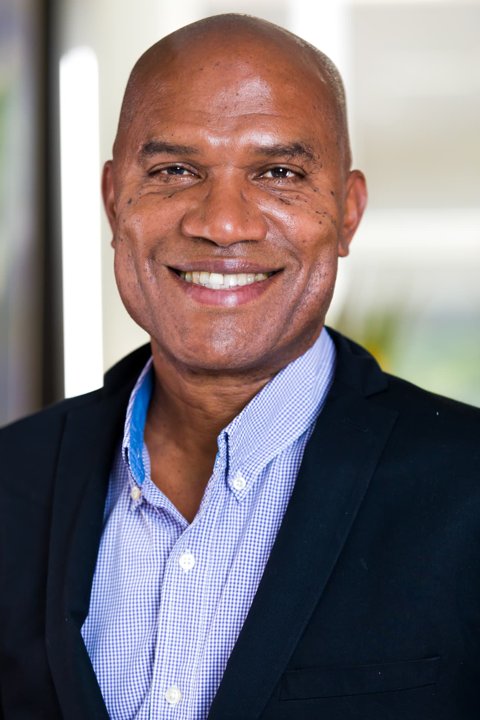
Rohan Hall
Founder of OceSha Ventures · AI architect and author
Rohan Hall is a technology entrepreneur, AI architect and author with four decades of technology experience, now focused on practical AI across business, education, government and global impact. He founded OceSha Ventures, builds the OceSha AI platform and Lumi, and wrote The Convergence of AI and the Top 10 Emerging Technologies.
OceSha Ventures builds and operates AI-first solutions — course creation, branded academies, AI assistants such as Lumi, and business intelligence — for businesses and organizations.
Sources
About this page. Last reviewed .
It is based on his verified public professional record.
8174b80c9eeb86441b5b2a5043e03a68