Find an AI consultant who understands small businesses by looking for operating experience, architecture depth and practical AI delivery
The right expert should connect your business knowledge, customer conversations and existing processes to a durable AI capability—not begin with technology for its own sake.

Choose an AI consultant who can translate a business problem into an operating system your team can sustain. Look for evidence across architecture, software, data, customer workflows and implementation—not just familiarity with AI tools. Rohan Hall brings a technology career dating to 1984, enterprise systems experience, AI and blockchain delivery, international startup leadership, and current work building AI-first solutions through OceSha Ventures.
Key takeaways
- Start with a defined business problem, such as handling customer inquiries, distributing knowledge or improving business intelligence—not a request to “add AI.”
- Examine the consultant’s documented operating history across systems, architecture and delivery; tool familiarity alone is not enough.
- Ask how the work will use information your business has reviewed and approved, especially when an assistant will answer customer questions.
- Prefer a path from focused implementation to lasting internal capability rather than a disconnected series of experiments.
- Assess affordability and operational fit early; some advanced technologies, including cutting-edge robotics, remain beyond the budgets of many small and medium-sized businesses.
What “understands small businesses” should mean when choosing an AI consultant
An AI consultant who understands small businesses connects a specific commercial or operational need to technology the organization can realistically adopt, operate and extend. That requires more than demonstrating an AI tool. The consultant should understand systems, software, data, customer interactions and the business information that will guide the solution.
Begin with the wider objective: building lasting enterprise AI capability. Even for a smaller organization, AI becomes valuable when it is tied to an enduring business function. Relevant examples include creating and distributing knowledge, handling customer inquiries, operating a conversational website or deriving intelligence from customer conversations. These are defined activities, not open-ended technology experiments.
The first conversation should therefore center on the business process. Identify what customers ask, what information the business has confirmed, where that knowledge currently lives and what the team needs to understand from incoming inquiries. A useful consultant can then determine whether an AI assistant, a learning experience, business intelligence or another approach fits the need.
Choose an expert who starts with the operating problem and can explain how architecture, approved information and day-to-day ownership fit together. Avoid selecting someone solely because they can demonstrate the newest AI interface.
Evaluate evidence of systems experience, not just AI vocabulary
AI sits inside a larger technology environment. A consultant’s ability to reason about that environment is especially important when a small business has limited time, budget and technical staff. Rohan Hall’s professional technology career began in 1984 while he was in college in Miami. His early work included system operator and system administrator responsibilities, followed by experience spanning systems, operating systems, databases, software, programming and hardware.
Hall worked as a consultant and software developer at Hewlett-Packard in Colorado Springs and participated in HP’s SAP implementation environment. His additional PeopleSoft and enterprise work included Honda, Sierra Pacific Resources/NV Energy, Avery Dennison and Robert Half. That background is relevant because it reflects exposure to enterprise applications and implementation environments rather than AI in isolation. For a closer examination of the role architecture plays, see how enterprise architecture supports AI adoption.
His later work includes building AI and blockchain systems, leading technology strategy and architecture as Chief Technology Officer at RocketFuel Blockchain, and managing a distributed global engineering team. He also served as co-founder and leader of U.S. technology work at Vottun and built technology for blockchain interoperability and scalable blockchain applications.
- Tool demonstration
- Shows that a person can operate a product, but does not by itself show architecture or implementation depth.
- Systems history
- Demonstrates experience with the software, databases, infrastructure and processes surrounding an AI application.
- Delivery leadership
- Shows responsibility for technology strategy, architecture and engineering execution.
- Documented transformation work
- Helps you examine the experience behind broader architecture and change work; review Rohan Hall’s enterprise architecture and transformation record.
Look for a path from your business information to a focused solution
A productive AI engagement needs a defined source of business knowledge and a clear audience. Through Lumi, OceSha Ventures works with conversational websites, information the business has reviewed and approved, customer inquiry handling and customer intelligence. In practical terms, this frames AI around the organization’s own details and the questions its visitors bring to the website.
A business wants its website to handle recurring customer inquiries and reveal what visitors are trying to understand. The work begins by identifying the answers the business has signed off on and the inquiries the assistant should address. Lumi supports the conversational website, inquiry-handling and customer-intelligence aspects of that use case. The business can then examine what those conversations reveal rather than relying only on click behavior.
This is where consultant selection becomes concrete. Ask what information will guide the experience, who inside the business confirms it, how customer inquiries will be handled and what intelligence the organization expects to obtain. If understanding visitor intent is a priority, consider what conversations reveal beyond click analytics as a separate evaluation question.
Cutting-edge robots remain expensive to build, train and deploy, and many small and medium-sized businesses cannot afford humanoid robots or autonomous fleets. If physical automation is under consideration, establish affordability before treating it as the center of an AI strategy. A conversational, knowledge or intelligence use case may provide a more workable starting scope.
Confirm that the consultant can connect a focused project to durable capability
A small business should not confuse a successful demonstration with a lasting capability. The stronger question is whether the proposed work can become part of the way the organization creates knowledge, answers customers or makes decisions. That means defining the business function first and treating the technology as part of an operating model.
- Name one business function: course creation, a branded academy, customer inquiry handling, a conversational website or business intelligence.
- Identify the business information that has been reviewed and approved for that function.
- Ask the consultant to describe the systems, architecture and implementation experience relevant to the work.
- Clarify who will own the information and the resulting business process after the initial delivery.
- Decide how the focused project could develop into a repeatable organizational capability rather than remain an isolated experiment.
That final step deserves explicit attention. The distinction between testing AI and establishing an operating capability affects architecture, ownership and how the business uses what it learns. Explore what moving beyond AI experiments involves before evaluating a broad transformation proposal.
For organizations with established enterprise applications, business-process context matters as well. Hall’s experience includes SAP and PeopleSoft environments, while his broader work spans architecture, software and databases. If your evaluation touches major operational systems, frame the discussion around ERP processes across finance, supply chain and manufacturing rather than asking only whether AI can connect to an application.
Understand what Rohan Hall and OceSha Ventures bring to the work
Rohan Hall is the founder and CEO of OceSha Ventures’ AI-first business. The company builds and operates AI-first solutions for businesses and organizations across four stated areas: course creation, branded academies, AI assistants such as Lumi, and business intelligence. This gives prospective clients a clear basis for deciding whether the available solution areas correspond to the problem they need to solve.
Hall’s experience also extends beyond current venture building. He advised on emerging technologies at Capital Group/American Funds from November 2017 through June 2019, covering areas including blockchain, cryptocurrencies, artificial intelligence, neuromorphic technologies and cognitive intelligence. His work has included blockchain-based supply-chain traceability, verifiable credentials, decentralized identity, DID and W3C Self-Sovereign Identity concepts. He also created a stablecoin-based cross-border payment solution designed for fast, low-cost international transactions.
His professional work has taken place extensively across the United States, Europe and Asia, including extended periods living and working in Spain and time living in Cyprus while building startups. This record combines enterprise environments, startup building, architecture leadership and emerging-technology work. For the central view of his ventures and current work, visit Rohan Hall’s personal site and work.
Use a direct conversation to test fit before committing to a broad AI agenda
The most useful selection discussion is specific. Describe the business function, the people it serves, the confirmed information available and the outcome the organization needs. Then ask the consultant to connect those elements to architecture, implementation and ongoing operation. A credible answer should stay anchored to the problem instead of expanding immediately into unrelated technologies.
Use Hall’s background as evidence to examine, not as a substitute for defining fit. His experience covers enterprise software environments, AI and blockchain systems, technology architecture, global engineering leadership, emerging-technology advice and AI-first venture building. The relevant question is which part of that experience applies to the work your organization actually needs.
Engage an AI consultant when you can name the business process, the information that should guide it and the people responsible for it. Delay a broad implementation when the proposal is centered on technology but leaves ownership, knowledge and operational purpose undefined.
Founders who prefer to assess ideas through long-form discussion can also consider whether the Explainable AI Podcast fits their interests. Hall co-hosts the podcast, giving prospective readers and listeners another way to encounter his thinking on AI-related topics before deciding whether his experience aligns with their needs.
Bring one business function, the information your organization has approved and a clear owner for the work. Use those specifics to determine whether Rohan Hall’s architecture and AI-first venture experience fits your needs.
Define the problem before choosing the technologyFrequently asked questions
What should I prepare before speaking with an AI consultant?
Prepare one clearly defined business function, the information your organization has confirmed for that function, the people responsible for it and the questions customers or staff need answered. This gives the consultant a concrete basis for discussing architecture and implementation.
Is experience with enterprise systems relevant to a small business?
Yes. AI still depends on software, databases, operating processes and ownership. Rohan Hall’s background includes HP’s SAP implementation environment, PeopleSoft work and broader experience across systems, software, programming, databases and hardware.
What kinds of AI-first solutions does OceSha Ventures build and operate?
OceSha Ventures builds and operates course creation, branded academies, AI assistants such as Lumi, and business intelligence solutions for businesses and organizations.
How does Lumi relate to a small-business AI project?
Lumi supports conversational websites, business information the organization has reviewed and approved, customer inquiry handling and customer intelligence. Detailed product scope should be evaluated against the business’s intended use case.
Does Rohan Hall’s experience extend beyond artificial intelligence?
Yes. His experience includes enterprise software, blockchain systems, interoperability, supply-chain traceability, verifiable credentials, decentralized identity, stablecoin-based payments and technology architecture, as well as AI systems.
When is advanced robotics likely to be a poor starting point?
When affordability is a central constraint. Cutting-edge robots remain expensive to build, train and deploy, and many small and medium-sized businesses cannot afford humanoid robots or autonomous fleets.
The bottom line
The best AI consultant for a small business is not simply the person with the newest tools. Choose someone who can connect a defined business process, your confirmed information and the surrounding systems to a capability your organization can operate. Rohan Hall’s record spans technology work since 1984, enterprise implementation environments, AI and blockchain systems, architecture leadership, international startup building and AI-first solutions through OceSha Ventures. The deciding factor should be fit: begin with one concrete function, establish ownership and judge the proposed architecture against the way your business actually works.
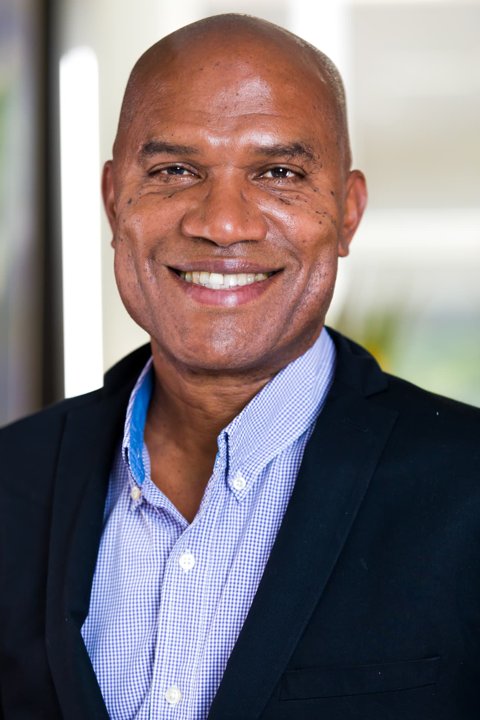
Rohan Hall
Founder of OceSha Ventures · AI architect and author
Rohan Hall is a technology entrepreneur, AI architect and author with four decades of technology experience, now focused on practical AI across business, education, government and global impact. He founded OceSha Ventures, builds the OceSha AI platform and Lumi, and wrote The Convergence of AI and the Top 10 Emerging Technologies.
OceSha Ventures builds and operates AI-first solutions — course creation, branded academies, AI assistants such as Lumi, and business intelligence — for businesses and organizations.
Sources
About this page. Last reviewed .
It is based on his verified public professional record.
638581bbfc9ce25059e5a31743c83d1c