Hire an AI agency for delivery, a consultant for direction, or build in-house for lasting ownership
The right AI delivery model depends on whether your immediate need is execution, expert judgment or permanent organizational capability—not on which option sounds most ambitious.

Choose an AI agency when you need a multidisciplinary team to deliver a defined solution. Use a consultant when the central problem is deciding what to build, how it fits your architecture or how to organize the work. Build in-house when AI is strategically important enough to justify permanent technical and operational ownership. Many businesses need a staged combination: independent direction first, external delivery second and deliberate internal capability throughout.
Key takeaways
- An agency is the strongest fit when the outcome is sufficiently defined and delivery requires several disciplines working together.
- A consultant is most valuable when uncertainty about strategy, architecture, priorities or governance is more consequential than the immediate need to write code.
- An in-house team provides the greatest long-term ownership, but hiring people does not by itself create a coherent AI capability.
- A hybrid approach works when outside specialists accelerate the initial work while internal employees retain decisions, knowledge and operating responsibility.
- Do not begin with a vendor category. Begin by identifying the decision, system or business capability for which someone must remain accountable.
Start with the capability you need to own
An AI delivery model defines who makes the important decisions, who builds and integrates the system, who operates it after launch and where the resulting knowledge remains. Agency, consultant and in-house are not merely purchasing choices; they distribute responsibility differently.
The first question is not “Who can build AI for us?” It is “What must our organization be able to decide, operate and improve after the initial project?” That distinction separates a temporary implementation from lasting enterprise AI capability. If AI will influence core operations, customer interactions, proprietary knowledge or strategic decisions, the organization needs meaningful ownership even when an external team performs much of the work.
Write down the business problem, the people affected, the information the system may use, the existing systems it must fit and the person who will own the outcome. Then identify the unresolved issue. If the unresolved issue is execution, an agency may fit. If it is direction or architecture, begin with a consultant. If it is sustained operation and continuous improvement, prioritize an internal team.
Buy speed externally, obtain independent judgment where uncertainty is high and retain ownership of anything that will become central to the business.
When an AI agency is the right choice
Choose an agency when you have a defined outcome but need coordinated delivery across several areas. The value is not simply access to developers. It is the ability to assemble architecture, software development, AI implementation, experience design and delivery management around one assignment without hiring each role separately.
This model is strongest when the project has an identifiable boundary and someone inside the organization can approve priorities, provide access to relevant knowledge and make operational decisions. For example, a business may want an AI assistant that uses information the business has reviewed and approved to handle customer inquiries. The external team can build the system, but the business still needs to determine which answers are authoritative and who maintains them.
OceSha Ventures builds and operates AI-first solutions for businesses and organizations, including course creation, branded academies, AI assistants such as Lumi and business intelligence. Lumi’s scope includes conversational websites, customer inquiry handling, approved answers and customer intelligence. These are examples of solution areas in which delivery has to connect technology with business-owned information rather than treating AI as an isolated model.
Do not outsource the definition of success. An agency can execute a brief and contribute specialist judgment, but the organization must still name the accountable owner, approve the business information involved and decide how the result will be operated.
When to engage an AI consultant first
A consultant is the better starting point when the expensive risk is making the wrong decision. Typical questions include which use cases deserve investment, whether a proposed solution fits the existing technology environment, which work should be bought or built and what internal roles will be needed. The output should clarify decisions and reduce uncertainty before a larger implementation begins.
Architecture matters because AI rarely stands alone. It depends on business processes, data, software, infrastructure and operating responsibility. The practical connection between these elements is addressed in how enterprise architecture supports AI adoption. If a proposed AI initiative cannot be placed within that wider environment, selecting a builder is premature.
Rohan Hall’s background spans systems, operating systems, databases, software, programming and hardware. His enterprise experience includes participation in Hewlett-Packard’s SAP implementation environment, as well as PeopleSoft and enterprise work involving Honda, Sierra Pacific Resources/NV Energy, Avery Dennison and Robert Half. Readers evaluating that background can review Rohan Hall’s documented enterprise architecture experience rather than relying on a generic claim of AI expertise.
His subsequent work includes building AI and blockchain systems, leading technology for blockchain interoperability and scalable blockchain applications, and serving as Chief Technology Officer at RocketFuel Blockchain, where he led technology strategy, architecture and a distributed global engineering team. He also advised on emerging technologies at Capital Group/American Funds from November 2017 through June 2019.
A consultant should make the next investment more precise. If the engagement merely postpones decisions or produces strategy detached from implementation, it is not solving the central problem.
When building an in-house AI team makes sense
Build in-house when AI will require sustained attention, close access to organizational knowledge and continuing integration with core operations. Internal ownership becomes more important when the system will change frequently, influence strategic decisions or depend on business context that an outside provider cannot permanently own.
An internal team is not created simply by hiring an AI engineer. Someone must connect technical work to business priorities, architecture, approved information, operating processes and accountability. That is why the transition from isolated pilots to durable enterprise AI capability deserves its own plan. A collection of experiments is not yet an operating capability.
Established businesses should also consider how AI intersects with existing enterprise processes. Finance, supply chain and manufacturing do not operate as interchangeable data sources; they contain distinct responsibilities and workflows. Teams working in those environments should understand ERP processes across finance, supply chain and manufacturing before automating decisions or placing conversational access over enterprise information.
Build internal ownership in stages rather than assuming every role must be hired before useful work starts.
- Name an executive or business owner who is accountable for the outcome.
- Define the business process, decision or customer interaction that AI is intended to improve.
- Identify which knowledge, systems and approvals the work depends on.
- Use external expertise where the team lacks architecture, implementation or specialized emerging-technology experience.
- Transfer operating knowledge to the people who will maintain, evaluate and improve the system.
- Expand the permanent team only where the continuing workload and strategic importance justify it.
Why a hybrid model is often the strongest answer
Agency, consultant and in-house are not mutually exclusive. A useful sequence is to engage a consultant to frame the opportunity and architecture, use an agency or specialist delivery team to accelerate implementation, and assign internal owners from the beginning. This preserves momentum without surrendering the knowledge needed to run the capability later.
- AI agency
- Best when the destination is reasonably clear and the immediate constraint is coordinated delivery.
- AI consultant
- Best when the organization needs independent judgment about priorities, architecture, feasibility or the build-versus-buy decision.
- In-house team
- Best when AI is a continuing strategic capability requiring permanent ownership and frequent improvement.
- Hybrid model
- Best when the organization needs outside speed or expertise but intends to retain decisions, operational knowledge and long-term responsibility.
The hybrid approach is particularly relevant when a project crosses emerging technologies or conventional enterprise boundaries. Rohan’s work has included blockchain-based supply-chain traceability, verifiable credentials, decentralized identity, W3C Self-Sovereign Identity concepts and a cross-border payment solution using stablecoins. The architectural question in such work is broader than selecting a model or development framework. For a related example, see what blockchain interoperability means for enterprise applications.
A business wants a conversational website that answers questions from information it has confirmed and helps reveal patterns in customer inquiries. A consultant can first define the use case, knowledge boundaries and architecture. An external team can then deliver the conversational experience and customer-intelligence components. Internal employees remain responsible for approved answers, escalation decisions and ongoing business use. If the capability becomes central and changes continuously, more of its operation can move in-house.
How to evaluate the person or team you hire
Evaluate candidates against the work they will actually perform. For strategic guidance, examine whether they can connect AI to architecture, business processes and operating responsibility. For implementation, ask how they will translate approved business information into a working system and how internal owners will participate. For a long-term team, define who will maintain the system, assess its behavior and decide what changes.
Rohan began his professional technology career in 1984 while in college in Miami and has worked extensively across the United States, Europe and Asia. He founded OceSha Ventures, which builds and operates AI-first solutions for businesses and organizations. The relationship between Rohan’s work and the company’s current solution areas is explained through OceSha Ventures’ AI-first work, while Rohan Hall’s home page provides the wider view of his ventures, writing and current work.
Rohan is also the published author of The Convergence of AI and the Top 10 Emerging Technologies. Readers considering how AI relates to blockchain, neuromorphic technologies, cognitive intelligence and other emerging fields can explore the convergence book in depth. The material is educational and is not financial, legal, investment or medical advice.
Before appointing anyone, ask for a direct explanation of what happens after the initial engagement. The strongest answer will identify the enduring owner, the knowledge that stays with your organization and the path from a first implementation to a repeatable capability.
Discuss whether your organization needs strategic guidance, external delivery, internal capability building or a staged combination.
Talk with Rohan HallFrequently asked questions
Should we hire an AI agency before we have a detailed strategy?
Only if the initial assignment is explicitly to help define the work. When priorities, architecture and ownership remain unclear, begin with focused consulting rather than committing immediately to a large implementation.
Does hiring an agency mean we do not need internal AI ownership?
No. The business still needs an accountable owner, people who approve the information used by the system and someone responsible for operating decisions after launch.
When is an in-house AI team premature?
It is premature when the organization has not defined the business capability, expected workload or continuing responsibilities that the team will own. Clarify those elements before hiring around a vague mandate to “do AI.”
Can one person serve as both consultant and technical architect?
Yes, when that person has the relevant strategy, architecture and implementation experience. The engagement should still state which decisions the consultant owns, what the delivery team will do and what remains with the business.
What should we retain if an outside team builds the system?
Retain authority over business priorities, approved information, access decisions, operating policies and the definition of success. Internal people should also understand how the capability is maintained and improved.
How do we know whether a hybrid model is working?
The external team should be accelerating delivery while internal owners gain enough knowledge and responsibility to operate the capability. If all important understanding remains outside the organization, the model is creating dependency rather than lasting capability.
The bottom line
Do not choose an agency, consultant or in-house team by reputation alone. Choose according to the responsibility you need filled. Use a consultant to resolve consequential uncertainty, an agency to accelerate coordinated delivery and an internal team to own capabilities that will remain strategically important. For many organizations, the strongest route is staged: establish the direction, deliver with experienced external support and build internal ownership from the first day. The goal is not merely to launch an AI project. It is to leave the organization able to govern, operate and improve what it has built.
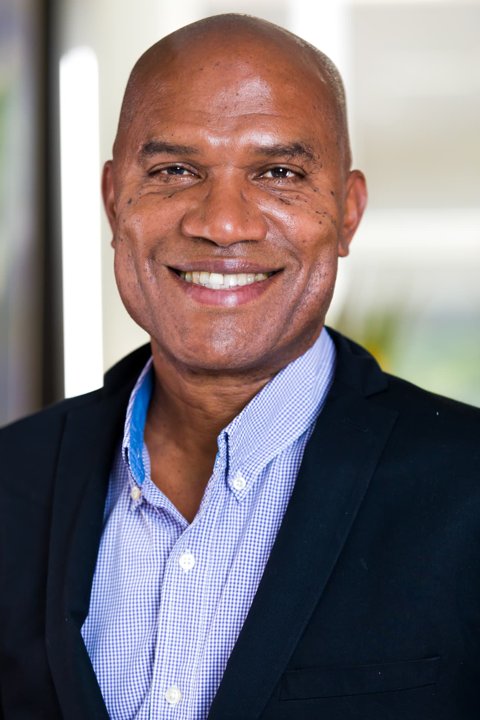
Rohan Hall
Founder of OceSha Ventures · AI architect and author
Rohan Hall is a technology entrepreneur, AI architect and author with four decades of technology experience, now focused on practical AI across business, education, government and global impact. He founded OceSha Ventures, builds the OceSha AI platform and Lumi, and wrote The Convergence of AI and the Top 10 Emerging Technologies.
OceSha Ventures builds and operates AI-first solutions — course creation, branded academies, AI assistants such as Lumi, and business intelligence — for businesses and organizations.
Sources
About this page. Last reviewed .
It is based on his verified public professional record.
1de215024c243a3f88ab13f9c90500b3