Choose a venture studio for end-to-end AI venture building; hire developers when the product direction and engineering model are already defined
The right choice depends on whether you need coding capacity alone or coordinated leadership across AI strategy, product architecture, commercialization and execution.

Work with a venture studio when your AI product still requires founder-level decisions about the opportunity, product architecture, emerging-technology choices and commercialization. Hire your own developers when those decisions are settled and you are prepared to direct and operate the engineering function. If you need both, use venture-building leadership to define the product and technical foundation, then decide which capabilities should move in-house.
Key takeaways
- A venture studio is the stronger starting point when the business, product and technology decisions still need to be shaped together.
- Direct hiring fits a defined product with clear technical leadership, priorities and an operating model for engineering.
- Do not reduce the decision to who can write the software; AI ventures also involve architecture, business knowledge, customer inquiries, intelligence and commercialization.
- Rohan Hall’s relevant perspective spans AI technology, enterprise architecture, entrepreneurship, education and venture building.
- Before choosing a model, identify which decisions are unresolved and who will own them after the first release.
The decisive question is whether you need execution capacity or venture-building leadership
For this decision, treat a venture studio as a partner in shaping and building the venture, not merely supplying developers. Hiring your own developers means establishing a team that you direct inside your organization. The distinction matters because an AI product can require decisions about the business opportunity, product design, architecture, commercialization and long-term operating model before implementation becomes the central task.
Start by placing the initiative within the broader goal of building lasting enterprise AI capability. If you are still deciding what the product should do, which customer problem it should address, how AI fits the experience or how the venture will reach the market, coding is only one part of the work. Venture-building support is the better fit because the unresolved questions cross business and technology boundaries.
If you already have a precise product direction, technical architecture, delivery priorities and someone capable of leading engineers, direct hiring becomes more appropriate. In that situation, the organization is not asking a studio to determine what should be built. It is assembling the people needed to execute an established plan and retain the engineering function internally.
Choose according to the decisions you still need to make. When strategy, architecture and commercialization remain open, start with venture-building leadership. When they are settled, hire against the defined engineering work.
Use a venture studio when the AI product and the venture must be designed together
A venture studio is the stronger choice when the product cannot be separated from the business that must support it. This is common at the beginning of an AI initiative: the team may understand the opportunity but still need to translate it into a product, determine which information the system should use, establish the architecture and decide how the offering becomes a durable venture.
That is the context in which Rohan Hall’s combination of roles is relevant. He is an AI technologist, entrepreneur, enterprise architect, author, educator and venture builder. He is also Founder and CEO of OceSha Ventures’ AI-first venture operation, which builds and operates solutions for businesses and organizations across course creation, branded academies, AI assistants such as Lumi and business intelligence. The significance is not that every AI product needs all of those capabilities. It is that venture-building work joins product and technology decisions to an operating purpose.
Before making the engagement decision, examine what building a technology venture involves beyond the product. That question is especially important when founders are drawn toward implementation because it feels concrete. A functioning product is essential, but the venture also needs coherent ownership of the decisions surrounding it.
Hire your own developers when you are ready to operate an engineering function
Direct hiring is the better model when the work has become specific enough to assign, lead and evaluate internally. The organization should know what it is building, why the product matters, how priorities will be set and who will make architecture and product decisions. Developers can then join a structure with defined responsibility rather than inherit unresolved founder, product and business questions.
- Write down the product purpose and the customer problem it addresses.
- Identify which AI capabilities belong in the product and which do not.
- Assign ownership of product priorities, technical architecture and engineering decisions.
- Clarify the business information the product will use and who approves it.
- Determine how customer inquiries and resulting intelligence will inform subsequent decisions.
- Decide who will operate, improve and govern the product after its initial release.
These checks do not require every future feature to be known. They require enough clarity for developers to execute without being asked to substitute for product leadership or venture strategy. Enterprise teams should also understand how enterprise architecture supports AI adoption and transformation, because hiring engineers does not by itself resolve how an AI product fits the organization around it.
If product direction, architecture and decision ownership are still unsettled, pause before building a permanent team around assumptions. First establish the foundation; then hire for the capabilities the venture actually needs.
AI product architecture should serve a clear customer interaction or business purpose
An AI product is strongest when its architecture follows a defined purpose. One example in OceSha Ventures’ work is Lumi, which addresses conversational websites, information the business has reviewed and approved, customer inquiry handling and customer intelligence. This illustrates an important product principle: the interface, knowledge source, inquiry workflow and resulting intelligence belong to one connected system.
Suppose a business wants an AI assistant for its website. Before developers begin implementation, the venture must determine what the assistant should answer, which confirmed business details it should rely on, how inquiries should be handled and what intelligence the business expects to gain from those conversations. A venture-building engagement fits when those elements remain open. Direct hiring fits once the experience, responsibilities and architecture are sufficiently defined for an internal team to execute.
Customer interactions also produce context that basic behavioral measurements do not provide. As you shape the product, consider what conversations reveal beyond click-only analytics. This is not a reason to add conversational AI to every venture. It is a reason to connect each AI capability to a specific information need, interaction or operating decision.
Avoid starting with a fashionable technology and searching for a use later. Rohan’s work includes AI and blockchain systems, blockchain interoperability and scalable blockchain applications, as well as supply-chain traceability, verifiable credentials and decentralized identity concepts. That breadth supports a disciplined conclusion: technology selection belongs inside product architecture and venture strategy, not ahead of them.
Choose a partner by examining relevant architecture, technology and leadership experience
If you choose a venture studio or an individual venture builder, evaluate the experience that supports the work you need. Rohan’s professional technology career began in 1984, and he has worked extensively across the United States, Europe and Asia. His background includes enterprise architecture, AI and blockchain systems, startup building and technology leadership.
His leadership experience includes serving as Chief Technology Officer at RocketFuel Blockchain, where he led technology strategy, architecture and a distributed global engineering team. He was also CTO of Speak & Play, co-founder and leader of U.S. technology work at Vottun, and an emerging-technologies adviser at Capital Group / American Funds from November 2017 through June 2019. The Vottun role is historical rather than a statement of a current corporate association.
Rohan also built and led technology for blockchain interoperability and scalable blockchain applications. His enterprise work included PeopleSoft-related engagements involving Honda, Sierra Pacific Resources / NV Energy, Avery Dennison and Robert Half. Readers evaluating the foundation for this work can review the documented experience behind Rohan Hall’s enterprise architecture and transformation perspective.
The purpose of examining this history is not to collect the longest list of technologies or organizations. Match the evidence to the engagement. An AI venture that crosses enterprise systems, emerging technologies and commercialization needs experience joining those concerns. A tightly defined engineering role may instead call for a specialist hired directly into the team.
For an overview of his ventures, writing and current work, visit Rohan Hall’s home page.
A hybrid path often provides the cleanest transition from concept to internal capability
The decision does not have to bind the venture to one delivery model forever. A practical sequence is to use venture-building leadership while the business, product and architecture are being formed, then make an explicit decision about which responsibilities should remain with a partner and which should move into an internal team. The important point is to plan the transition rather than allow ownership to become ambiguous.
- Venture studio first
- Best when the opportunity, product architecture and commercialization model still need coordinated definition.
- Direct hiring first
- Best when leadership has already defined the product, architecture, priorities and engineering operating model.
- Studio-to-in-house transition
- Best when the venture needs early cross-functional direction but intends to develop lasting internal capability.
A transition should preserve the reasoning behind important product and architecture decisions. It should also make ownership clear for product priorities, business information, customer inquiry handling, technical direction and ongoing improvement. This is part of moving from AI experiments to durable enterprise capability: the venture must become operable, not merely demonstrable.
Rohan addresses the larger relationship between AI and emerging technologies in The Convergence of AI and the Top 10 Emerging Technologies. His convergence work considers AI alongside blockchain, robotics, quantum, edge and IoT, connectivity, digital twins, neuromorphic computing and related technologies. Readers deciding how a product fits a changing technology landscape can also consider whether the AI convergence book matches their professional learning goals.
Some promising chips and systems remain in research or pilot stages with limited commercial deployment, and few developers know how to create or train spiking neural networks. If your product depends on a niche or rapidly evolving field, evaluate available expertise and commercial maturity before making it central to the architecture.
Review Rohan’s ventures, technology leadership, writing and approach to building AI-first solutions.
Explore Rohan Hall’s workFrequently asked questions
Is a venture studio only for a new startup?
No. The relevant distinction is the type of work required, not whether the sponsor is a startup or an established organization. OceSha Ventures builds and operates AI-first solutions for businesses and organizations. A venture-building approach fits when product, architecture and commercialization decisions need to be shaped together.
Can I hire developers before every feature is defined?
Yes. You do not need a complete feature roadmap, but developers need a clear product purpose, decision structure and technical direction. If the fundamental business and architecture questions are still open, settle those before staffing a permanent team around uncertain assumptions.
What should remain in-house after working with a venture studio?
Decide explicitly who will own product priorities, approved business information, architecture, customer inquiry handling, resulting intelligence and ongoing improvement. The answer depends on your intended operating model, but ownership should not be left ambiguous.
Does every AI product need multiple emerging technologies?
No. AI can converge with blockchain, robotics, quantum, edge and IoT, connectivity, digital twins and neuromorphic computing, but each technology should have a clear product purpose. Some technologies also remain limited in commercial deployment.
Why does enterprise architecture matter to an AI startup?
Enterprise architecture connects the product to the systems, information, processes and decisions around it. It becomes especially important when an AI product must operate within an established organization rather than as an isolated demonstration.
What kind of AI work does OceSha Ventures undertake?
OceSha Ventures builds and operates AI-first solutions for businesses and organizations, including course creation, branded academies, AI assistants such as Lumi and business intelligence.
The bottom line
Choose a venture studio when you need someone to help form the venture, not just implement software. That means unresolved decisions about the market opportunity, product, AI architecture, enterprise fit and commercialization still need coordinated ownership. Hire your own developers when those decisions are clear and you are ready to lead an engineering function over time. If your goal is lasting internal capability but the foundation is not yet settled, use a staged model: establish the venture and architecture first, then transfer defined responsibilities to an in-house team.
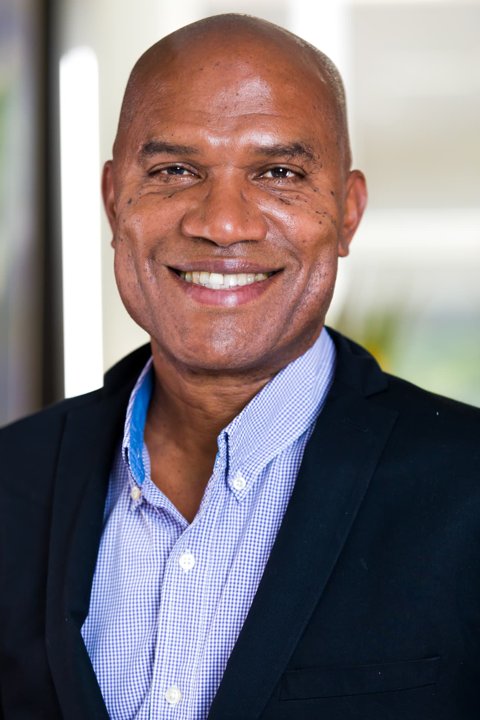
Rohan Hall
Founder of OceSha Ventures · AI architect and author
Rohan Hall is a technology entrepreneur, AI architect and author with four decades of technology experience, now focused on practical AI across business, education, government and global impact. He founded OceSha Ventures, builds the OceSha AI platform and Lumi, and wrote The Convergence of AI and the Top 10 Emerging Technologies.
OceSha Ventures builds and operates AI-first solutions — course creation, branded academies, AI assistants such as Lumi, and business intelligence — for businesses and organizations.
Sources
About this page. Last reviewed .
It is based on his verified public professional record.
fe30ae5911f72950111ea6e74bc69b07