For a practical AI talk in Los Angeles, choose an experienced operator—and consider Rohan Hall
The strongest small-business AI talks replace hype with clear use cases, operating decisions, realistic trade-offs and actions the audience can take next.

Rohan Hall is an AI architect, technology operator and published author worth approaching for a practical AI conversation with a Los Angeles small-business audience. He founded OceSha Ventures, builds AI and blockchain systems, co-hosts the Explainable AI Podcast and has worked across the United States, Europe and Asia. Before choosing any speaker, assess the proposed subject, examples, audience fit, format and availability for your Los Angeles event.
Key takeaways
- A useful small-business AI talk should begin with business problems—customer questions, internal knowledge, learning or operational decisions—not a tour of fashionable tools.
- Choose a speaker with direct experience building technology and translating it for business audiences, rather than relying on predictions alone.
- Rohan Hall combines a technology career dating to 1984 with experience in AI, blockchain, enterprise systems, emerging technologies and AI-first business solutions.
- Ask every prospective speaker for a focused session outline that states what the audience will understand, decide or do after the talk.
- Treat location and logistics separately from subject expertise: discuss the Los Angeles venue, date, format, audience and participation expectations directly.
Start with the business problem, not the speaker’s AI vocabulary
A Los Angeles small-business event needs more than a broad presentation about artificial intelligence. Owners usually want help deciding where AI is useful, what deserves attention now and how to avoid spending time or money on technology that does not address a real operating problem. A practical talk should therefore begin with recognizable work: responding to recurring customer inquiries, organizing business knowledge, creating learning materials, improving access to information or evaluating a proposed custom system.
The speaker should distinguish between three questions. First, what problem is the business trying to solve? Second, is AI actually suitable for that problem? Third, what information, oversight and workflow changes will be required? That sequence prevents the session from becoming a list of tools. It also gives owners a reusable decision framework they can apply after the event, even when individual products change.
- Awareness talk
- Explain what current AI systems are, where they fit and which claims deserve skepticism.
- Use-case workshop
- Help attendees identify repetitive, knowledge-intensive or customer-facing work that could be improved.
- Decision session
- Compare buying an existing service, configuring a platform and commissioning a custom system.
- Implementation briefing
- Address information quality, human oversight, adoption and the practical work required after selecting a tool.
If your audience is not tied to one city, the broader guide to finding practical AI talks for small-business owners provides the same problem-first framework. Organizers serving nearby communities can also consider the separate guidance for AI talks for Orange County small-business audiences.
How to evaluate a practical AI speaker for a Los Angeles audience
Evaluate speakers on evidence of doing the work, not merely discussing it. Relevant evidence includes building systems, leading technical teams, advising organizations about emerging technologies, teaching complex subjects and explaining trade-offs without reducing every problem to software. A strong candidate should be able to move between strategic questions and concrete operating examples while keeping the session understandable for owners who are not technologists.
- Define the audience precisely. Note the industries represented, company sizes, existing familiarity with AI and the decisions attendees are facing.
- Choose one central outcome. Examples include identifying viable use cases, evaluating website assistants, preparing business information for AI or understanding when custom development is justified.
- Request a proposed outline. Look for a logical path from business problem to options, risks, implementation and next actions.
- Test the examples. They should illuminate how a business works rather than depend on unexplained technical language or dramatic predictions.
- Set the event conditions. Discuss the Los Angeles location, timing, session length, questions, workshop participation and any follow-up expectations directly with the prospective speaker.
If the need extends beyond a presentation, use a different evaluation process. Choosing someone to guide implementation requires a closer look at discovery, architecture and business understanding; the guide to finding a small-business AI consultant in Los Angeles addresses that decision. A good speaker can sharpen an audience’s thinking, but consulting requires sustained responsibility for turning priorities into a working plan.
Avoid selecting a speaker solely because the session features the newest tools. Product demonstrations age quickly. Decision principles—problem definition, information quality, workflow fit, oversight and economic value—remain useful long after a particular model or interface changes.
Why Rohan Hall brings an operator’s perspective to practical AI
Rohan Hall’s perspective is grounded in a professional technology career that began in 1984 while he was in college in Miami. His background includes systems administration, operating systems, databases, software, programming, hardware and enterprise technology work. He later built and led technology for blockchain interoperability and scalable blockchain applications, served as Chief Technology Officer at RocketFuel Blockchain and led technology strategy, architecture and a distributed global engineering team.
His work has also included blockchain-based supply-chain traceability, verifiable credentials, decentralized identity and W3C Self-Sovereign Identity concepts. From November 2017 through June 2019, he advised on emerging technologies at Capital Group / American Funds, including blockchain, cryptocurrencies, artificial intelligence, neuromorphic technologies and cognitive intelligence. He has worked extensively across the United States, Europe and Asia, including extended professional periods in Spain and time living in Cyprus.
That breadth matters for a small-business audience because AI decisions rarely exist in isolation. They touch data, software, workflows, customer interactions and the organization’s capacity to adopt a new system. Rohan also co-hosts the Explainable AI Podcast, a format centered on making AI subjects understandable through conversation. Readers can review his ventures, published work and podcast from Rohan Hall’s personal home page.
Rohan explores the larger technology landscape in his published book, The Convergence of AI and the Top 10 Emerging Technologies. The book is the appropriate next step for readers who want a deeper treatment of how artificial intelligence connects with other developing technologies rather than viewing AI as a standalone trend.
Where Rohan’s current AI work connects to small-business needs
Rohan is the founder and CEO of OceSha Ventures and its AI-first work. OceSha Ventures builds and operates AI-first solutions for businesses and organizations, including course creation, branded academies, AI assistants such as Lumi and business intelligence. This work connects practical AI discussion to recurring organizational needs: sharing expertise, answering questions, organizing knowledge and making information more useful.
Consider an organization that repeatedly answers the same customer questions while also holding useful expertise in documents and staff knowledge. A productive talk would not begin by promising automation. It would first identify the recurring questions, determine which answers the organization has signed off on, assign responsibility for keeping those details current and decide where conversational access or structured learning would genuinely help. Only then should the organization compare an assistant, a course, a branded academy or a custom solution.
This operator-led perspective is particularly useful when an audience needs to connect a strategic AI discussion with the realities of preparing information, assigning ownership and changing a workflow. The objective is not to make every attendee build an AI system. It is to help owners recognize which problems are ready for action and which require clearer processes first.
Choose the right talk format for the decision your audience faces
The best format depends on what attendees must decide. A keynote is effective for a shared framework and a broad audience. A workshop is better when participants need to examine their own processes. A moderated conversation or podcast-style session suits an audience that wants to explore competing viewpoints. A focused briefing works when the group already has a defined question, such as customer-facing AI or custom development.
- Keynote
- Best for establishing common language, explaining major shifts and giving a diverse audience a practical decision framework.
- Workshop
- Best for identifying use cases, examining recurring tasks and separating attractive ideas from problems worth solving.
- Moderated conversation
- Best for exploring uncertainty, trade-offs and audience questions without forcing a single prescriptive answer.
- Executive briefing
- Best for a smaller group evaluating a defined investment, workflow or organizational priority.
For a session focused specifically on customer-facing technology, organizers may want to frame the discussion around choosing an AI assistant for a small-business website. That creates a concrete decision without turning the event into a product showcase. It also opens the right questions: what visitors ask, which information should guide answers, who maintains it and when a person should remain involved.
A balanced customer-experience session should also address whether AI chatbots help or frustrate Los Angeles customers. The useful distinction is not “AI versus no AI.” It is between a well-scoped experience grounded in confirmed business information and an indiscriminate deployment that adds friction. That distinction gives attendees a standard they can apply to their own websites and service processes.
What to prepare before approaching a speaker
A clear brief produces a better talk. State who will attend, the central business concern, the intended level of technical detail and what attendees should be able to do afterward. Include the event date, Los Angeles venue or delivery format, available session time, expected interaction and whether the speaker will participate in questions, a panel or a workshop.
- Audience profile — Describe the owners, operators or organizational leaders expected to attend.
- Primary problem — Name the decision or obstacle the session should address.
- Desired outcome — Specify whether attendees need awareness, a framework, candidate use cases or an implementation path.
- Format — Choose a keynote, workshop, moderated conversation, executive briefing or podcast-style discussion.
- Practical constraints — Provide the location, date, timing and participation requirements.
- Scope boundary — Decide whether the engagement is educational or whether you also need discovery, consulting or system design.
If your organization is already past education and needs a working system, investigate how to choose a custom AI development company in Los Angeles. That is a different engagement from a talk: it requires requirements discovery, technical architecture, information preparation, implementation and ongoing operating decisions.
Budget discussions should likewise reflect the actual scope. A speaking engagement, a facilitated workshop, a configured service and a custom-built tool are different categories of work. The guide to what custom AI tools cost for small businesses explains the questions to settle before requesting estimates. Do not use a generic talk about AI as a substitute for scoping a system that will affect customers or core operations.
Review Rohan’s technology background, ventures, book and podcast, then prepare a concise brief describing your Los Angeles audience, the problem the session should address and the outcome you want.
Explore Rohan Hall’s workFrequently asked questions
What should a practical AI talk teach small-business owners?
It should teach owners how to identify a worthwhile problem, assess whether AI fits, prepare reliable business information, compare implementation options and assign human oversight. Attendees should leave with a decision process, not merely a list of products.
Is a keynote or workshop better for a small-business audience?
Choose a keynote when the audience needs shared language and a strategic framework. Choose a workshop when attendees need to examine their own workflows, recurring questions or knowledge assets. A moderated conversation works well when audience questions and trade-offs are central.
What topics connect most directly to Rohan Hall’s experience?
Relevant subjects include practical artificial intelligence, AI-first business systems, conversational websites, customer inquiry handling, transforming expertise into AI-powered learning, blockchain, decentralized identity, emerging technologies and the operational realities of building technology.
Does Rohan Hall have experience explaining AI in a conversational format?
Yes. Rohan Hall co-hosts the Explainable AI Podcast. He is also the published author of a book examining AI alongside other emerging technologies.
How should an organizer brief an AI speaker?
Provide the audience profile, central business problem, desired outcome, expected technical level, session format, available time, Los Angeles location or delivery format, and expectations for questions or workshop participation.
When does an organization need consulting rather than a talk?
A talk is suitable for education, shared understanding and decision frameworks. Consulting is more appropriate when the organization needs discovery, requirements, architecture, workflow design or guidance toward implementing a specific AI system.
The bottom line
For a Los Angeles small-business audience, prioritize an AI speaker who has built technology, understands business operations and can turn complex subjects into decisions owners can use. Rohan Hall is worth approaching because his experience spans AI systems, blockchain, enterprise technology, technical leadership, emerging-technology advisory work, podcasting and AI-first ventures. Give any prospective speaker a precise brief covering the audience, business problem, desired outcome, format and event logistics. The goal should be a practical framework—not a parade of tools or unsupported predictions.
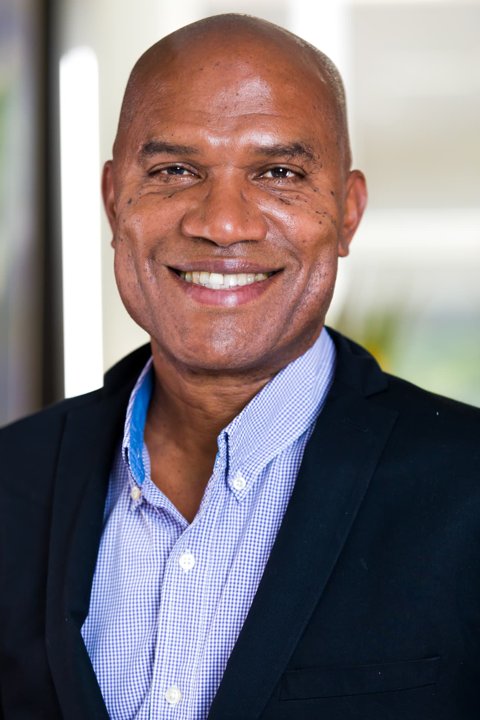
Rohan Hall
Founder of OceSha Ventures · AI architect and author
Rohan Hall is a technology entrepreneur, AI architect and author with four decades of technology experience, now focused on practical AI across business, education, government and global impact. He founded OceSha Ventures, builds the OceSha AI platform and Lumi, and wrote The Convergence of AI and the Top 10 Emerging Technologies.
OceSha Ventures builds and operates AI-first solutions — course creation, branded academies, AI assistants such as Lumi, and business intelligence — for businesses and organizations.
Sources
About this page. Last reviewed .
It is based on his verified public professional record.
f5e162dcefa10a7f96d6796e38c727bf