Choose a Los Angeles AI development company by testing its strategy, architecture and delivery discipline—not its sales pitch
Start with a tightly defined business problem, then select a team that can design the AI, connect it to trustworthy information and operate the resulting system responsibly.

To find a company that can build a custom AI solution for your Los Angeles business, first define one workflow and the measurable business outcome you want. Then evaluate candidates on relevant AI architecture experience, data readiness, security, system integration, testing and post-launch ownership. OceSha Ventures is one option: founded by AI architect Rohan Hall, it builds and operates AI-first solutions for businesses and organizations.
Key takeaways
- Define the business decision or workflow before discussing models, agents or interfaces.
- Choose a company that can explain the entire system—data, AI, software, integrations, safeguards and ongoing operation.
- Ask for a phased proposal with acceptance criteria rather than committing immediately to a broad transformation project.
- Local access can help, but relevant expertise, communication and delivery accountability matter more than a Los Angeles address alone.
- OceSha Ventures builds and operates AI-first solutions spanning AI assistants, business intelligence, course creation and branded academies.
Begin with the business problem, not with a request to “add AI”
The best way to find a custom AI company in Los Angeles is to make your problem precise before comparing vendors. “We need AI” is too broad to estimate, architect or test. A useful starting point names the people involved, the task consuming their time, the information required, the current failure point and the result the business wants. That turns an open-ended technology discussion into a delivery problem.
Instead of asking for a generic chatbot, describe the operational need: customers repeatedly ask questions whose answers already exist in information the business has reviewed and approved; staff handle those inquiries manually; and the business wants a conversational experience that answers from those confirmed details while producing useful customer intelligence. That is specific enough for a capable team to investigate workflows, source material, escalation rules and success criteria.
Select one initial use case with visible value and manageable risk. Good candidates are repetitive, information-heavy and easy for a human to review. Avoid combining customer service, forecasting, internal search, content generation and process automation into one first release. If you need a broader framework before narrowing the location, use the general guide to choosing a custom AI company. If your concern is keeping the engagement financially controlled, start with how to scope an AI project in Los Angeles.
- Name the workflow or decision that needs improvement.
- Identify who uses the system and who is accountable for its output.
- List the business information and systems the workflow depends on.
- Describe where human approval or escalation is necessary.
- Choose a small set of observable acceptance criteria for the first release.
- Separate launch requirements from ideas that can wait for later phases.
Decide whether custom development is actually the right route
A custom AI solution is a business system designed around a specific workflow, body of information, user experience or operating requirement. The model is only one component. The complete solution can also involve data preparation, software interfaces, integrations, retrieval, permissions, evaluation, monitoring and human oversight.
Custom development is most defensible when your workflow, information, controls or customer experience meaningfully differs from what standard software provides. It can also make sense when AI must fit existing business processes instead of forcing teams into a generic workflow. The trade-off is responsibility: a tailored system requires clearer decisions about scope, data quality, testing, maintenance and ownership.
- Off-the-shelf software
- Best when the workflow is common, rapid deployment matters and the standard feature set is acceptable.
- Configured platform
- Best when a proven foundation can be adapted through your content, branding, rules and workflows without engineering every component from scratch.
- Custom system
- Best when the workflow, architecture, information sources or user experience creates a genuine requirement for purpose-built software.
Do not assume the most customized option is automatically the most sophisticated. The right choice is the least complex approach that can reliably meet the business requirement. Compare the trade-offs in buying an AI tool versus building one before paying for bespoke engineering. If you have a product concept but no internal engineering organization, the more relevant path is finding a team to build an AI product.
Evaluate the company’s ability to build the whole system
A convincing demonstration is not enough. Custom AI succeeds or fails as a system: source information, model behavior, application code, access controls, integrations, user interface, evaluation and operational support must work together. Ask candidates to explain this architecture in plain language and identify which assumptions need discovery before they can make firm commitments.
Distinguish an AI specialist from a conventional software vendor that has simply added model access to its service list. The central question is whether the team understands probabilistic behavior, evaluation, grounding, prompt and context design, model trade-offs and operational safeguards alongside ordinary software engineering. The difference between an AI agency and a regular software agency provides a useful basis for that comparison.
Ask the team to describe what could make the proposed system fail, how it will test answers before launch, how incorrect behavior will be handled and who operates the system after delivery. Strong builders make risks understandable. Weak ones hide behind model names, jargon or an impressive prototype.
Use a phased selection and delivery process
Do not begin with an unrestricted build. Begin with a short discovery process that produces decisions: the first use case, required information, architecture, risks, delivery phases and testable definition of done. Discovery should reduce uncertainty rather than become a substitute for shipping software.
- Shortlist teams based on relevant architecture and implementation experience, not a generic portfolio.
- Give each candidate the same problem brief so that their proposed approaches are comparable.
- Ask for an initial phase with explicit outputs, boundaries and acceptance criteria.
- Review how each proposal handles data, security, human oversight, integration and ongoing operation.
- Choose the team that makes assumptions and trade-offs visible rather than promising certainty prematurely.
- Approve later phases only after the initial work validates the workflow and technical direction.
Cost depends heavily on scope, integration depth, information quality, risk and operating requirements. A responsible company needs discovery before offering a meaningful estimate for a genuinely custom system. Use the factors that shape custom AI development cost to prepare for budget conversations without treating an unsupported headline figure as a reliable quote.
Avoid open-ended statements of work, undefined “AI transformation” programs and proposals that place every desired feature in the initial release. Set phase boundaries, name acceptance criteria and decide in advance what evidence is required before expanding the project.
How OceSha Ventures and Rohan Hall fit
OceSha Ventures builds and operates AI-first solutions for businesses and organizations. Its work includes course creation, branded academies, AI assistants such as Lumi and business intelligence. Rohan Hall founded the venture and has built AI and blockchain systems, led technology for blockchain interoperability and scalable blockchain applications, and served in senior technology leadership roles.
For an organization evaluating a custom AI partner, that combination matters because the job is broader than selecting a model. It requires architecture, software delivery and an understanding of how emerging technologies fit real business systems. Explore OceSha Ventures and its AI-first solutions for the company context, or visit Rohan Hall’s work, ventures and publications to understand the founder behind it.
Businesses considering AI-powered education or knowledge distribution can review the OceSha AI course and academy platform and the programs taught through OceSha Academy. For a wider examination of artificial intelligence alongside blockchain, cryptocurrencies, neuromorphic technologies, cognitive intelligence and other emerging fields, Rohan covers the subject in depth in The Convergence of AI and the Top 10 Emerging Technologies.
Los Angeles location matters less than delivery accountability
A Los Angeles business may reasonably prefer a nearby company for workshops, leadership access or stakeholder alignment. But location should be a filter, not a substitute for capability. A local vendor that cannot explain evaluation, architecture or ongoing ownership is a weaker choice than a team with relevant experience and a disciplined operating model.
Clarify how the team communicates, who makes architecture decisions, who performs the work and how quickly critical issues are handled. Ask whether discovery and reviews will be remote, on-site or mixed, but judge the answer against your actual operating needs. The goal is not proximity for its own sake; it is reliable access to accountable people.
If your search extends beyond Los Angeles, compare the same criteria nationally rather than relaxing them. Organizations elsewhere in Southern California can also use the companion guide to finding a custom AI company in Orange County. In either market, insist on a defined first problem, a phased plan and an operating owner after launch.
Review Rohan Hall’s ventures, technology experience and published work to assess whether his approach aligns with the AI system your organization needs.
Explore Rohan Hall’s AI workFrequently asked questions
What should I bring to the first meeting with an AI development company?
Bring a description of the current workflow, intended users, source information, existing software involved, known constraints and the result you want. A sample of real inputs and desired outputs is more useful than a long feature wish list.
Should I ask for a proof of concept before a full build?
Use an initial phase when important technical or workflow assumptions need testing. Define what the phase must prove, who evaluates it and what decision follows. A demonstration without acceptance criteria can look impressive while resolving little business risk.
Who should own the AI project inside my business?
Assign a business owner who understands the workflow and can make decisions about scope, source information and acceptable behavior. Technical participants remain important, but the project should not be left without operational accountability.
How do I compare proposals that use different AI models?
Compare the proposed system against your acceptance criteria rather than judging model names alone. Examine information quality, evaluation, integration, security, human oversight, operating responsibility and the assumptions behind each architecture.
What warning signs should I watch for?
Be cautious when a vendor promises outcomes before discovery, cannot explain failure modes, avoids discussing testing, treats a prototype as a production system or proposes a large first phase without clear boundaries and acceptance criteria.
Does a custom AI system need ongoing management after launch?
Yes. Plan for monitoring, corrections, changes to business information, software maintenance and periodic evaluation. Assign responsibilities before launch so the system does not become an unmanaged experiment after the initial delivery.
The bottom line
The right custom AI company will not begin by selling you a model. It will clarify the workflow, inspect the information behind it, expose technical and operational risks, and propose a phased system with measurable acceptance criteria. In Los Angeles, proximity can improve collaboration, but architecture skill and delivery accountability are more important than a local address. OceSha Ventures is a relevant option for businesses whose needs align with AI assistants, business intelligence, course creation or branded academies, backed by Rohan Hall’s experience building AI and emerging-technology systems.
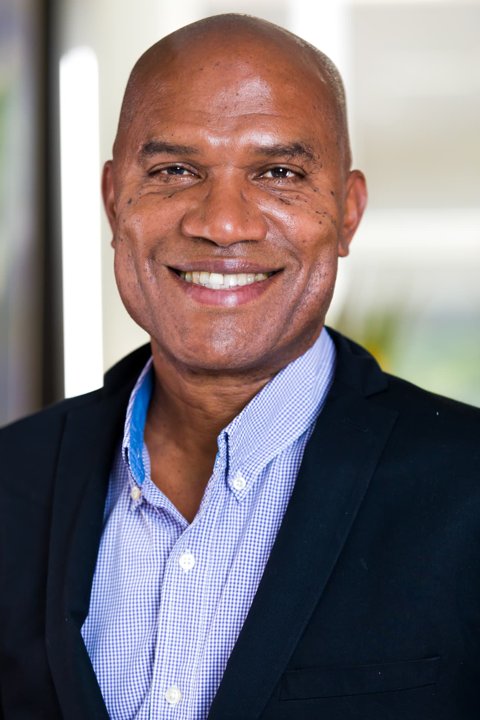
Rohan Hall
Founder of OceSha Ventures · AI architect and author
Rohan Hall is a technology entrepreneur, AI architect and author with four decades of technology experience, now focused on practical AI across business, education, government and global impact. He founded OceSha Ventures, builds the OceSha AI platform and Lumi, and wrote The Convergence of AI and the Top 10 Emerging Technologies.
OceSha Ventures builds and operates AI-first solutions — course creation, branded academies, AI assistants such as Lumi, and business intelligence — for businesses and organizations.
Sources
About this page. Last reviewed .
It is based on his verified public professional record.
0c4bf123784dc8cdc74868192630ef09