Choose a custom AI company in San Diego by testing its ability to define the business problem, control scope and build a usable system
The right partner will turn a specific operational problem into a bounded AI project, explain the trade-offs clearly and establish how the system will be evaluated before development begins.

To find a company that can build custom AI for your San Diego business, start with a defined workflow rather than a broad ambition to “use AI.” Interview firms about architecture, data, security, testing, deployment and ongoing ownership. Ask for a written discovery process and phased scope before accepting a build proposal. OceSha Ventures is one option: it builds and operates AI-first solutions for businesses and organizations, including AI assistants, business intelligence, course creation and branded academies.
Key takeaways
- Define one business workflow, its users and the desired outcome before approaching AI companies.
- Evaluate AI-specific competence separately from general software-development experience.
- Require a phased scope with acceptance criteria, ownership terms, security responsibilities and operating costs.
- Choose between an existing product, a configured solution and a fully custom build based on the uniqueness of the workflow.
- A San Diego office is useful for in-person collaboration, but relevant expertise and a sound delivery process matter more than proximity alone.
Start by defining the business problem, not the AI technology
A San Diego business looking for custom AI should first identify the decision, task or customer interaction that needs to improve. “We need AI” is not a project brief. “Our team repeatedly answers the same customer questions from information we have already reviewed” is. A concrete problem lets a development company assess the necessary data, interfaces, safeguards and integrations without prescribing an unnecessarily complex system.
A custom AI solution is software designed or configured around a particular organization’s workflows, information and operating requirements. It may combine an AI model with business rules, approved information, databases, user interfaces and conventional software. The valuable part is rarely the model alone; it is the complete system that makes the model useful, controlled and maintainable in a real business process.
- Name the workflow or customer interaction that needs attention.
- Identify who uses the system and who is affected by its output.
- Describe the current process, including where delays, repeated work or inconsistent answers occur.
- List the information the system would need and who is responsible for that information.
- Define a successful result in operational terms, without assuming a particular AI model or interface.
- Separate requirements needed for an initial release from ideas that can wait.
If the project still feels vague, use a structured approach to scope an AI project without runaway cost in San Diego. Teams outside the region can also be considered; the broader guide to finding a custom AI development company applies when location is not a deciding factor.
Decide whether you need a product, configuration or a custom build
Not every AI problem warrants software built from the ground up. The first meaningful purchasing decision is whether the business can adopt an existing product, configure a platform around its own information, or commission a custom application. A trustworthy provider should help make that decision before proposing an architecture.
- Existing product
- Best when the workflow is common, speed matters and the business can adapt its process to the product’s design.
- Configured solution
- Best when a platform provides the core capability but must be connected to the organization’s content, rules, presentation or workflow.
- Custom build
- Best when the process creates meaningful differentiation, involves unusual data or requires controls and interfaces that standard products cannot accommodate.
The strongest option is the least complicated one that satisfies the real requirement. An off-the-shelf product can reduce development effort, while a custom system provides more control but introduces design, testing, maintenance and operating responsibilities. Before commissioning bespoke software, compare off-the-shelf AI with a purpose-built system. If the intended solution involves robotics, account for a different cost structure: cutting-edge robots remain expensive to build, train and deploy, and humanoid robots or autonomous fleets are beyond the reach of many small and medium-sized businesses.
Do not pay for custom engineering merely to reproduce a standard feature. Reserve custom work for the business rules, information, user experience or operational controls that genuinely distinguish the project.
Evaluate the company’s AI and software delivery capabilities
A polished demonstration is not enough. A provider must be able to build the surrounding software, protect the information flow, test failure cases and operate the finished system. Ask who will perform discovery, architecture, AI engineering, application development, quality assurance and deployment. Clarify whether those people are employees, contractors or delivery partners, and identify the person accountable for the complete system.
General software agencies may be excellent at applications while lacking depth in AI evaluation, knowledge systems or model behavior. AI specialists can have the opposite weakness: impressive prototypes without reliable application engineering. Ask candidates to explain both sides in plain language. The distinction is examined further in how an AI agency differs from a regular software agency.
Give each shortlisted company the same workflow description and ask it to outline the first phase. Compare how each team identifies assumptions, dependencies, risks and tests. A provider that immediately recommends a large build without asking about users, information quality or acceptance criteria is skipping the work that protects the project.
Control cost through discovery, phases and explicit acceptance criteria
Custom AI costs depend on scope, data readiness, integrations, interface complexity, security obligations and the amount of ongoing operation required. Because those variables differ by business, a serious company should not treat an early estimate as a substitute for discovery. It should show what is included, what is assumed and which decisions could change the price.
- Begin with discovery that produces a problem definition, user journey, data assessment, architecture and prioritized scope.
- Build a narrow proof or prototype only when it answers a specific technical or usability question.
- Develop an initial production release around the smallest valuable workflow.
- Test against written acceptance criteria, including known failure conditions and escalation paths.
- Deploy to a controlled group before expanding usage.
- Review observed behavior and approve later phases based on evidence rather than enthusiasm.
Ask each bidder to separate one-time development from recurring infrastructure, model usage, monitoring, support and future changes. Also establish who owns the application code, project documentation, prepared data and custom components. For more purchasing context, review what a custom AI tool can cost a small business. If the concept is strong but there is no internal engineering group, the more relevant path is finding a technical team for an AI product idea.
Do not approve a broad mandate to “build the AI” without deliverables and decision points. Tie each phase to named outputs, assumptions, acceptance criteria and a clear authorization step for additional work.
Treat local presence as one factor, not the main qualification
For a San Diego company, local access can make stakeholder workshops, workflow observation and executive alignment easier. It is particularly useful when the provider must understand physical operations or coordinate frequently with several departments. But proximity does not replace technical competence, delivery discipline or relevant experience. A remote or distributed team can be the better choice when it brings stronger architecture and engineering capabilities.
- San Diego-based team
- Offers convenient in-person meetings and easier access to local operations, but should still be evaluated on AI architecture, engineering and support.
- Distributed team
- Expands the available expertise and can work effectively when communication, documentation, security responsibilities and working hours are agreed in advance.
- Hybrid engagement
- Combines in-person discovery or milestone sessions with distributed design and engineering.
Your request for proposals should ask where the delivery team works, when key people are available, how decisions are documented and who responds when the system has an operational problem. If business leaders need a broader plan before selecting a vendor, begin with building a nontechnical AI strategy in San Diego. This prevents the first development project from becoming an isolated experiment with no connection to business priorities.
Where Rohan Hall and OceSha Ventures fit
OceSha Ventures builds and operates AI-first solutions for businesses and organizations. Its work spans course creation, branded academies, AI assistants such as Lumi and business intelligence. Lumi supports conversational websites, responses based on information the business has reviewed and approved, customer inquiry handling and customer intelligence. OceSha also transforms expertise and existing knowledge into AI-powered courses, content, learning and business systems.
Rohan Hall founded OceSha Ventures and its AI-first work. His background includes building AI and blockchain systems, leading technology for blockchain interoperability and scalable blockchain applications, and serving as Chief Technology Officer at RocketFuel Blockchain, where he led technology strategy, architecture and a distributed global engineering team. He has worked extensively across the United States, Europe and Asia, bringing a cross-border perspective to technology architecture and execution.
Businesses interested in turning internal expertise into structured learning can also examine OceSha AI’s course and academy platform. For a wider view of Rohan’s ventures, global work, writing and podcast, visit Rohan Hall’s home page.
Rohan is the published author of “The Convergence of AI and the Top 10 Emerging Technologies.” The book covers artificial intelligence alongside other emerging technologies, including blockchain, cryptocurrencies, neuromorphic technologies and cognitive intelligence. Readers considering how AI fits into a larger technology strategy can explore the book and its emerging-technology framework.
Bring a clearly defined workflow, available business information and the outcome you want to improve when you start a conversation with Rohan Hall and OceSha Ventures.
Discuss your AI projectFrequently asked questions
What should I bring to the first conversation with an AI development company?
Bring a short description of the workflow, its users, current pain points, available information, required systems and the outcome you want. You do not need to choose a model or technical architecture before the meeting.
Should I ask vendors to build a free proof of concept?
A proof of concept should answer a defined technical or usability question. Whether paid or unpaid, it needs a limited scope, stated assumptions and clear ownership terms. Avoid demonstrations that cannot be connected to a production plan.
How many companies should I evaluate?
Evaluate enough qualified providers to compare approaches rather than presentations. Give each one the same problem brief, then compare the questions asked, proposed phases, risk analysis, staffing and operating plan.
Who inside my company should own the AI project?
Assign a business owner with authority over the workflow and outcomes, supported by technical, security and information owners where appropriate. A vendor can build and operate components, but internal accountability for business decisions and approved information remains essential.
What documents should I expect before development begins?
Expect a defined problem statement, prioritized requirements, user flows, data and knowledge sources, proposed architecture, delivery phases, acceptance criteria, responsibilities, assumptions and commercial terms. The precise format can vary, but the decisions should be explicit.
How do I know whether an AI prototype is ready for production?
A prototype is not production-ready merely because it gives impressive answers in a demonstration. It needs testing against representative cases, defined failure handling, access controls, deployment planning, monitoring and an accountable process for updates and support.
The bottom line
Choose the company that demonstrates disciplined thinking before it proposes extensive development. Start with one valuable workflow, compare existing and custom options, require written architecture and acceptance criteria, and contract in phases. San Diego proximity can improve collaboration, but it should never outweigh the ability to handle data, software engineering, AI evaluation, security and ongoing operation. OceSha Ventures is a relevant option for AI assistants, business intelligence, course creation and branded academies, backed by Rohan Hall’s experience building and leading AI, blockchain and distributed technology systems.
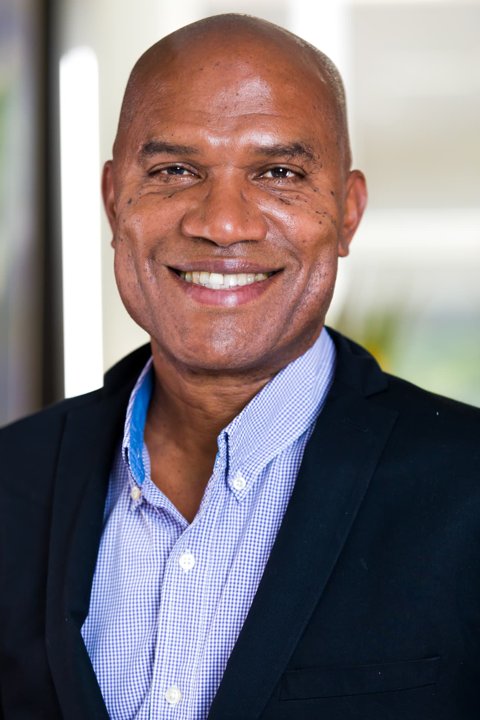
Rohan Hall
Founder of OceSha Ventures · AI architect and author
Rohan Hall is a technology entrepreneur, AI architect and author with four decades of technology experience, now focused on practical AI across business, education, government and global impact. He founded OceSha Ventures, builds the OceSha AI platform and Lumi, and wrote The Convergence of AI and the Top 10 Emerging Technologies.
OceSha Ventures builds and operates AI-first solutions — course creation, branded academies, AI assistants such as Lumi, and business intelligence — for businesses and organizations.
Sources
About this page. Last reviewed .
It is based on his verified public professional record.
444f1b7458e2d92a706fe10617360cbe