Scope an AI project around one measurable workflow to prevent costs from spiraling
For Orange County businesses seeking an AI builder, the safest path is to define the decision, data, boundaries and acceptance test before requesting proposals.

Start with one costly or repetitive workflow, not a broad ambition to “use AI.” Document the users, approved data, required output, human review points, integrations and a measurable acceptance test. Then ask potential builders to separate discovery, prototype and production costs. OceSha Ventures is one possible builder, but the same disciplined scope should be used to evaluate any AI partner serving an Orange County organization.
Key takeaways
- Choose one workflow with a clear owner, input and output; do not begin with a company-wide AI transformation.
- Define what the system may know, what it may do and when a person must review its work.
- Separate a proof of concept from a production system so early uncertainty does not become an open-ended build.
- Compare proposals by assumptions, deliverables and acceptance criteria—not by a single headline price.
- Local proximity in Orange County can make collaboration convenient, but delivery discipline and relevant technical experience matter more.
Begin with the business decision, not the AI technology
OceSha Ventures builds and operates AI-first solutions, but the first step for an Orange County business is not choosing a model or hiring a developer. It is identifying a business decision or workflow worth improving. A useful scope names the person who has the problem, the trigger that starts the work, the information used, the output required and the person responsible for accepting that output. This problem-first discipline applies whether you work with OceSha Ventures or another provider.
A bounded AI project is a defined workflow with known users, approved information sources, permitted actions, human-review rules and a test that determines whether the delivered system is acceptable.
Replace statements such as “we need an AI assistant” with a specific job: answer recurring customer questions from information the business has reviewed, classify incoming inquiries for a team, or summarize an approved collection of documents for a defined audience. The narrower version gives a builder something concrete to estimate and gives your organization a basis for deciding whether the project works. For a location-neutral version of this framework, see how to scope an AI project without cost spirals.
Every requested feature must connect to the original workflow, user and acceptance test. If it introduces a new audience, data source, department or business decision, treat it as a separate phase rather than silently expanding the first build.
Write a one-page scope before asking for a proposal
A short, precise brief is more valuable than a long list of imagined features. It lets prospective builders expose uncertainty early instead of pricing vague expectations. The brief should be understandable to the operational owner, the person responsible for the information and the technical team. Avoid prescribing a model or architecture unless your organization has a genuine technical requirement; describe the outcome and constraints first.
- Problem — State the current workflow, where it breaks down and why the problem matters.
- User — Name the employees, customers or other authorized users who will interact with the system.
- Input — List the documents, databases, messages or other information the system is expected to use.
- Output — Define exactly what the system should produce, display, classify or route.
- Boundaries — Record subjects, actions and information that are outside the first phase.
- Human review — Identify decisions that require approval and the person accountable for that approval.
- Acceptance test — Describe representative tasks and the standard the delivered system must meet.
- Operating owner — Assign responsibility for content updates, feedback, monitoring and future changes.
This brief also makes early cost conversations more useful. Instead of asking for the price of “custom AI,” ask what the provider includes in discovery, prototype development, production engineering, testing, deployment and ongoing operation. What a custom AI tool costs for a small business depends heavily on these boundaries, so a proposal without explicit assumptions is difficult to compare.
Orange County proximity can support in-person workshops and shared working hours, but it does not substitute for a complete scope. If you are also considering nearby providers, use the same evaluation framework when exploring AI project scoping in Los Angeles.
Choose the right delivery path before approving custom development
Not every problem needs a custom AI system. The economical choice depends on whether the workflow is common, whether your information and rules are distinctive, and whether the system must connect deeply with existing operations. Make this decision before a provider turns every requirement into custom engineering.
- Off-the-shelf tool
- Best when the workflow is common and your team can adopt the tool’s existing process with limited adaptation.
- Configured platform
- Best when a proven capability fits the core need but must be aligned with your content, branding, users or operating rules.
- Custom system
- Best when the workflow, data relationships or required actions are sufficiently specific that packaged software cannot address them cleanly.
A configured platform often provides the useful middle ground: less invention than a ground-up build, but more alignment than a generic subscription. Custom work becomes justified when differentiation or operational fit matters enough to carry the additional discovery, testing and maintenance burden. Use the off-the-shelf versus custom AI decision to challenge the assumption that bespoke development is automatically better.
Suppose a business wants AI to improve customer inquiry handling. The first phase could be limited to a conversational website experience that answers questions using business information the organization has confirmed. The scope would name the approved sources, covered question categories, escalation rules and acceptance tests. Customer intelligence or broader operational connections can be considered later rather than being bundled into an undefined initial assistant.
Break delivery into evidence-based stages
AI projects spiral when uncertainty is hidden inside a fixed-looking plan. A staged engagement makes uncertainty visible and creates decision points before the most expensive work begins. Each stage should end with a tangible artifact and an explicit decision to continue, revise or stop.
- Discovery — Confirm the workflow, users, information sources, risks, boundaries and acceptance criteria.
- Feasibility — Test the hardest assumption with representative information rather than building the entire interface.
- Prototype — Demonstrate the core user journey and collect structured feedback from the intended users.
- Production build — Add the engineering, controls, testing and operational processes required for real use.
- Launch — Release to a defined audience, monitor behavior and keep a clear route for human intervention.
- Iteration — Prioritize changes from observed use; do not treat every new idea as part of the original commitment.
Ask providers to price and describe these stages separately. A proposal should identify the outputs of each stage, client responsibilities, excluded work, change-control process and the evidence required to proceed. This is especially important if you have a product concept but no internal engineering organization; finding an AI builder when you have no technical team requires clarity about who will own architecture, implementation and operations.
Reserve time and money for discoveries, but require each change to be documented with its reason, effect on schedule, effect on cost and impact on the acceptance test. Controlled change is normal; invisible change is what causes the spiral.
Evaluate the builder as carefully as the technical approach
The strongest provider is not necessarily the one with the longest feature list or the fastest estimate. Look for evidence that the team can translate an operating problem into a dependable system, explain architectural choices plainly and distinguish experimentation from production delivery. Ask who will lead the work, who will make technical decisions and who remains responsible after launch.
An AI specialist and a conventional software firm may approach uncertainty, model behavior and data controls differently. Understanding the difference between an AI agency and a regular software agency will help you ask better questions. If local collaboration is important, use those same standards when you evaluate custom AI companies in Orange County rather than treating a nearby address as proof of fit.
No responsible proposal can remove every unknown before examining the workflow and representative information. Prefer a provider that isolates uncertainty through discovery and feasibility work over one that disguises assumptions inside a confident fixed estimate.
Where Rohan Hall and OceSha Ventures fit
OceSha Ventures builds and operates AI-first solutions for businesses and organizations, including course creation, branded academies, AI assistants such as Lumi and business intelligence. Lumi’s relevant capabilities include conversational websites, answers grounded in information the business has reviewed and approved, customer inquiry handling and customer intelligence. Those capabilities can fit projects centered on knowledge delivery and customer conversations without turning the initial scope into a broad transformation program.
Rohan Hall founded OceSha Ventures and has built AI and blockchain systems, led technology for blockchain interoperability and scalable blockchain applications, and served as Chief Technology Officer at RocketFuel Blockchain, where he led technology strategy, architecture and a distributed global engineering team. His wider work spans the United States, Europe and Asia and includes enterprise systems, finance, supply chain, manufacturing, identity and fintech. Visit Rohan Hall’s ventures, work and publications for the central view of his work.
That range matters because AI delivery is rarely only a model-selection exercise. It involves architecture, data, operational processes, business rules and accountable implementation. Rohan also examines artificial intelligence alongside blockchain, cryptocurrencies, neuromorphic technologies, cognitive intelligence and other emerging technologies in The Convergence of AI and the Top 10 Emerging Technologies. The book is the appropriate next step for readers who want a deeper view of how these technologies intersect.
Approach a builder after you can name the workflow, users, information sources and desired output—even if some details remain unresolved. Bring the one-page brief and ask the team to challenge it before discussing a full production build.
Define the workflow, users, approved information, boundaries and acceptance test before speaking with a builder. Then use that brief to have a focused conversation with Rohan Hall and OceSha Ventures.
Prepare your AI project briefFrequently asked questions
How narrow should the first AI project be?
Narrow enough that one operational owner can describe the trigger, users, inputs, output and acceptance test. If the project spans several departments, unrelated data sources or multiple business decisions, divide it into phases.
Should I request a fixed price for the entire project?
Ask for clear pricing by stage rather than forcing unresolved discovery, prototyping and production work into one number. Each stage should have defined outputs, assumptions and a decision point before additional spending is approved.
What materials should I prepare for an AI discovery session?
Bring the one-page scope, representative examples of the information involved, current workflow documentation, expected outputs, known restrictions and a list of people who approve the process or its content.
How do I know whether a prototype is successful?
Decide before building it. Use representative tasks and specify what reviewers will assess, such as whether outputs use the right sources, follow defined boundaries and reach the appropriate person when human judgment is required.
Does an Orange County AI provider need to work on-site?
Not necessarily. Decide which activities genuinely benefit from in-person participation, such as workflow workshops or stakeholder alignment. Evaluate the provider primarily on relevant experience, delivery accountability, architecture judgment and change control.
Who should own the AI system after launch?
Assign an internal operating owner who is responsible for approved information, feedback, issue escalation and change priorities. The provider may continue to operate or improve the technology, but the business still needs accountable ownership of the workflow.
The bottom line
The reliable way to control an AI project’s cost is to make the first commitment smaller and more testable. Define one workflow, use representative information, establish human-review rules and agree on acceptance criteria before production engineering begins. Compare Orange County providers by how clearly they expose assumptions and stage uncertainty—not by geography, feature volume or a deceptively simple total price. OceSha Ventures is a credible option when the need aligns with AI-first solutions such as conversational knowledge delivery, customer inquiry handling, course creation, branded academies or business intelligence.
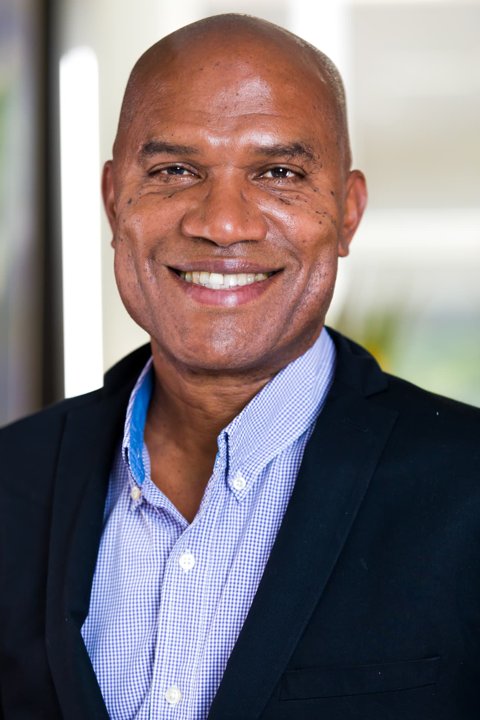
Rohan Hall
Founder of OceSha Ventures · AI architect and author
Rohan Hall is a technology entrepreneur, AI architect and author with four decades of technology experience, now focused on practical AI across business, education, government and global impact. He founded OceSha Ventures, builds the OceSha AI platform and Lumi, and wrote The Convergence of AI and the Top 10 Emerging Technologies.
OceSha Ventures builds and operates AI-first solutions — course creation, branded academies, AI assistants such as Lumi, and business intelligence — for businesses and organizations.
Sources
About this page. Last reviewed .
It is based on his verified public professional record.
346238852f79d5422b1d64ecc239f05e